
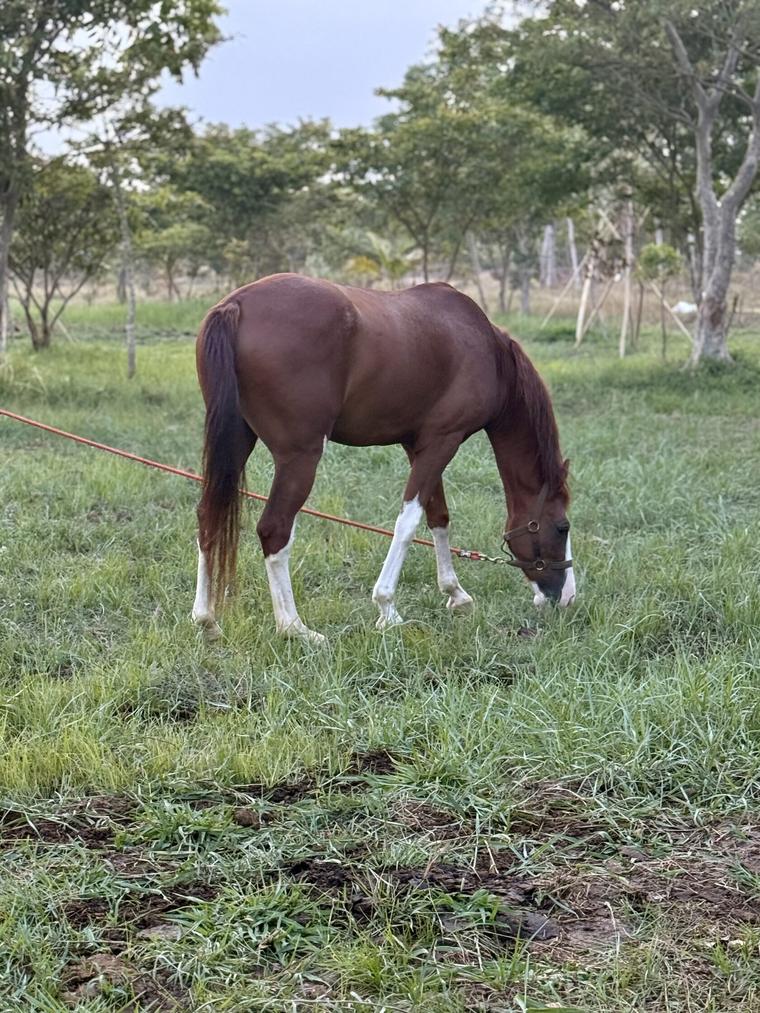
By early evening, the visible part of the ranch day is contracting. Tack is put away. Horses are fed and checked. Guest movement around the yard ends, and the stable returns to the people and animals whose routines continue after the ride.
Those hours explain what we mean when we call Vonfidel Ranch a living place. The Ranch is not held together by a single philosophy displayed at the entrance. It is kept through repeated choices about work, rest, access, water, ground, equipment, and the point at which a plan should be left alone.
Decisions that rarely become stories
Some of the most important days at a riding estate contain very little action. A trail is rested after rain. A departure moves earlier because of heat. A horse is changed after preparation because its manner is not quite right. A ride closes when the footing has moved beyond the margin we are prepared to use.
Guests may experience only the result: a different route, a shorter day, or no ride at all. The reason is explained plainly, without turning the decision into a performance of responsibility.
One Journal entry records a day when the ground carried weight differently and two horses hesitated where they normally did not. There was no incident to point to. We did not wait for one. The saddles stayed in place. The horses were walked and did no work.
Keeping a place includes making that decision while it is still uneventful.
The horse sets the useful limit
A horse at the Ranch has a day that extends well beyond the hours a visitor sees. Feeding, turnout, bedding, water, handling, work, and recovery have to make sense together. Bookable capacity is therefore set by the horses available for the conditions, not simply by empty spaces in an itinerary.
The same principle governs the stable after work. Guests do not wander through the yard at night for another photograph or visit. The horses have finished their working day. Feeding and checks belong to the staff, and the quieter hours belong to the horses.
This boundary can feel unusual in a hospitality setting, but it is easy to understand once the stable is treated as the horses' home and workplace. Access is a responsibility as well as a welcome.
Land does not follow an itinerary
Punanai's old tanks, seasonal streams, red earth, low ground, village roads, and open country do not remain in a fixed condition for a booking calendar. Rain changes banks and crossings. Dry weeks change where dependable water sits. Wildlife and local activity can affect the sensible route through an area.
Maps and GPS records help us prepare. Current ground and people in the area provide the rest of the picture. A cultivator, cattle herder, or village resident may have noticed water, wildlife movement, or a damaged section of track before anyone at the Ranch reaches it.
This local information is part of daily fieldcraft. It is received with respect and weighed alongside reconnaissance, weather, and what the horses show us. The landscape is not scenery waiting for a ride; it is an active set of conditions to which the ride must answer.
Hospitality needs edges
Good hospitality does not require every request to be granted. At the Ranch, the welcome includes clear limits: riding by prior arrangement, honest suitability review, small numbers, horses matched to riders, and changes when welfare or ground conditions require them.
Those limits protect the guest as well as the horse. They also keep the team from promising an experience that the day cannot responsibly provide. A warm answer can still be no, or not today, or a different horse and route.
For the right guest, this makes the stay easier to understand. There is no pressure to collect activities. Time around the horses and land can be allowed to retain its own pace without being stretched into constant entertainment.
The practical shape of stewardship
Stewardship is often spoken of as an ideal. In practice, it looks like drainage repaired before the next rain, bedding kept suitable for rest, water checked, tack inspected, a route given time to recover, and a horse left out of work when the decision is not clear enough.
It also means protecting the character of the place from its own demand. More bookings, more access, and more visible activity can all be commercially attractive. Each also uses horses, land, staff attention, and quiet. The Ranch has to decide what it can carry without weakening the thing a guest came to encounter.
A living place is kept through hundreds of such decisions, most of them too ordinary to announce. Their evidence appears the next morning: horses ready without hurry, a yard that can begin cleanly, and ground still fit for the work asked of it.
Related reading: The Ranch, The Standard of Access, Notes from a Day We Didn't Ride, and The Horses at Night.