
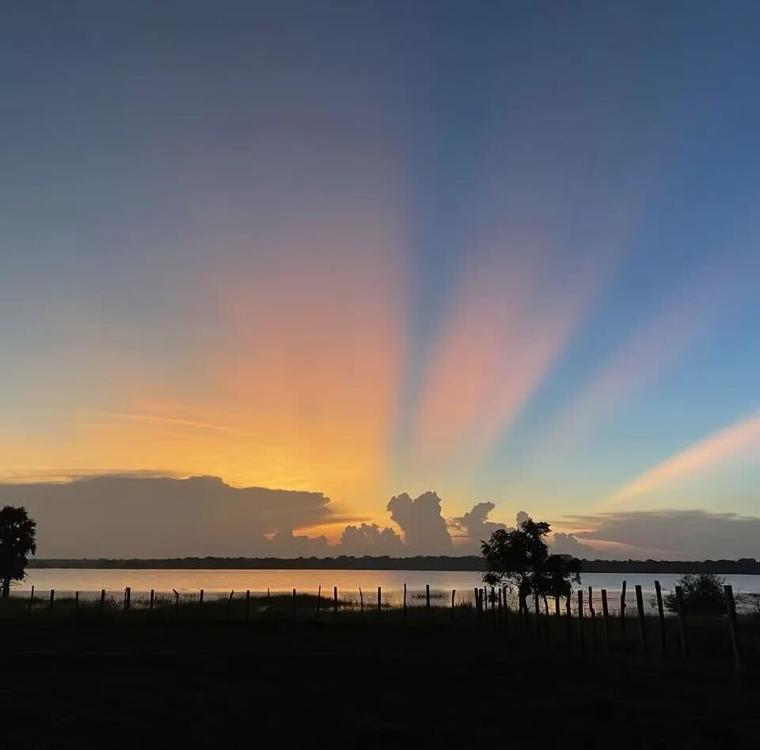
The last vehicle leaves the ranch a little after dusk. The gate closes, the illumination is downscaled to security lights, and the part of the day that guests see is over. What follows is the longer part. A horse here spends more hours in darkness than under saddle, under a brush, or under a rider's gaze, and those unwatched hours are where the truth of any equestrian operation lives.
The Cost of Sleep
A horse is built to sleep on its feet, and this fact has misled people for centuries into believing that is all a horse needs. The stay apparatus, the arrangement of ligaments and tendons that locks the limbs, lets a horse doze upright with almost no muscular effort. It is a marvel of engineering and it is also incomplete. Standing rest is shallow rest. The deep sleep a horse requires, the phase in which the brain does its real recovery, comes only when the animal lies flat on the ground.
And there is the problem. A horse lying flat has surrendered every advantage it owns. It cannot flee. It cannot see well. Its whole evolutionary inheritance argues against the position. So a horse will only lie down and sleep deeply when two conditions are met: the ground must be acceptable, and the horse must feel safe. Not be safe. Feel safe. The distinction matters, because feeling safe is something an estate has to earn from the animal night after night, and no amount of fencing can substitute for it.
What the New Horse Learns
We have watched this earning happen many times, because every horse brought down to Sri Lanka arrives carrying the habits of wherever it came from. Almost without exception, the new arrival does not lie down at night. Not the first week, often not the first month. It stands through the dark hours, dozing upright, holding on to the vigilance that some earlier stable, some earlier life, taught it to keep.
Then it begins to notice the others. The resident horses lie down around it, flat out on the bedding, stretched to their full length with an abandon that alarms first-time visitors. More than once a member of staff has gone quietly into a stall at night to check on a horse lying so still, so completely flat, that the worst seemed possible, only to find the animal snoring. That is the sound of a horse that has stopped keeping watch. It is one of the finest sounds a stable can produce.
The new horse studies this. Confidence in a herd is contagious in the same way fear is, only slower, and after enough nights of watching its neighbors sleep unharmed, the arrival lies down too. When that first flattened patch of bedding appears in a new horse's stall, we take note of the date. The horse has passed its own judgment on the place, and no certificate we could write would carry the same authority.
None of this happens on bad footing. The willingness to lie down is inseparable from what the horse is being asked to lie down on, which is why bedding depth, stall flooring, and drainage are welfare decisions rather than housekeeping ones. A horse will not stretch flat on ground that is hard, damp, or fouled, whatever else the estate gets right.
The Sentinel
Watch a settled herd in the small hours and a quiet arithmetic reveals itself. The horses do not all lie down at once. One remains standing while others rest, head up, ears working the darkness, and after a while the roles rotate without ceremony. Ethologists call this sentinel behavior. The horses would not call it anything. It is simply what a herd does when it trusts its members more than it trusts the dark.
The practical meaning for a horsekeeper is considerable. A horse that lies down at night is not merely comfortable. It is telling you that the herd around it is coherent, that the footing is right, and that the accumulated experience of many previous nights has produced confidence. Deep sleep is a verdict the horse passes on your entire operation.
Why the Stable Empties of People
Part of how that verdict is earned here is a rule that occasionally surprises our guests. Some of the guest accommodation at Vonfidel Ranch sits within sight of the stables, and the temptation to wander over in the evening, to linger at the rails, to visit the horses one more time, is entirely human. We do not permit it.
The reasoning is not secrecy. It is the horse's working day. A horse that has carried a rider well across country has performed its duty, and performed it to a standard the guest has usually just spent dinner praising. What it is owed in return is what any professional is owed at the end of a shift: to be left alone. Feeding time belongs to the horses and the staff. The hours after belong to the horses entirely. Guests are asked to sign off as the horses do, to take their own rest, their own meal, their own recovery, and to let the evening settle over the yard undisturbed.
Access to this estate has always been by arrangement, and the arrangement does not end at the gate. It extends into the hours of the day. A stable where people drift through at all hours is a stable where no horse ever fully stops keeping watch, and everything this essay describes depends on the watching being allowed to stop.
The Confession in the Bedding
Morning is when the night files its report, and the report is written in the stall. Flattened bedding along one wall. Shavings caught in the tail and pressed into the coat of one flank. The outline of a large animal that lay at full stretch for an hour or more. These marks are the most reassuring sight in horsekeeping, and their absence over a run of mornings is one of the most serious.
A horse that never lies down is reporting something. Perhaps pain, since a horse with a sore limb or an aching back may fear the effort of getting up again. Perhaps footing it does not trust. Perhaps a disturbance in the herd or in the night itself. Sleep deprivation in horses is real, it accumulates, and a chronically unrested horse will eventually begin to collapse into brief involuntary sleep while standing, sometimes buckling at the knees. Long before that stage, its work, its temper, and its immune system have all quietly paid. The daily reading of bedding is therefore not housekeeping. It is diagnostics.
The Tropical Night
In the dry country of eastern Sri Lanka, night is not merely the absence of day. It is a different country. The heat that pressed on the land since morning lifts within an hour of sunset, and the horses feel the release as plainly as we do. Grazing changes rhythm. The insect population changes shift, the day's flies retiring as the mosquitoes arrive, which is its own management problem and one reason airflow matters as much at midnight as at noon.
The darkness here also carries an older reputation. This is Punanai, a name once attached to fear, and the horses graze calmly over ground that human memory still associates with the man-eater. The horses hold no such memory. They read the night as it is now, not as it was written, and their calm is the most reliable census of the present darkness that we possess. When the horses stand easy at two in the morning, the night is easy. When every head in the paddock rises at once and points the same direction, something is there, and the horses will have that information minutes before any person does.
The Night Check
Somewhere between ten and eleven, a light moves through the stable. The night check is a short ritual and an old one, practiced in some form by every serious yard on earth. Water levels. The sound of chewing, which is the sound of a horse at peace. The particular stillness a contented stable produces, which an experienced horseman can assess from the doorway without a word.
The check is brief by design. The purpose of the night is rest, and a well-run night is one in which the humans are almost unnecessary. Almost. The horse that stands apart, the water that has gone untouched, the restlessness with no obvious cause, these are the small early signals the night check exists to catch, and catching them at eleven rather than at dawn has saved more horses than most owners will ever know.
Dawn as the Report Card
First light settles the question. A horse that has slept comes to the morning loose and unhurried, with a soft eye and an appetite. A horse that has not carries the night with it, and a horseman who knows the animal will see it before the feed bucket is down. Condition, coat, and expression at dawn are the summary page of the twelve hours no one supervised.
This is why we hold that the night is the measure of the estate. Any operation can compose a beautiful day. The horses will tell you, every morning without exception, what kind of night stands behind it.
The Cost of Sleep
A horse is built to sleep on its feet, and this fact has misled people for centuries into believing that is all a horse needs. The stay apparatus, the arrangement of ligaments and tendons that locks the limbs, lets a horse doze upright with almost no muscular effort. It is a marvel of engineering and it is also incomplete. Standing rest is shallow rest. The deep sleep a horse requires, the phase in which the brain does its real recovery, comes only when the animal lies flat on the ground.
And there is the problem. A horse lying flat has surrendered every advantage it owns. It cannot flee. It cannot see well. Its whole evolutionary inheritance argues against the position. So a horse will only lie down and sleep deeply when two conditions are met: the ground must be acceptable, and the horse must feel safe. Not be safe. Feel safe. The distinction matters, because feeling safe is something an estate has to earn from the animal night after night, and no amount of fencing can substitute for it.
What the New Horse Learns
We have watched this earning happen many times, because every horse brought down to Sri Lanka arrives carrying the habits of wherever it came from. Almost without exception, the new arrival does not lie down at night. Not the first week, often not the first month. It stands through the dark hours, dozing upright, holding on to the vigilance that some earlier stable, some earlier life, taught it to keep.
Then it begins to notice the others. The resident horses lie down around it, flat out on the bedding, stretched to their full length with an abandon that alarms first-time visitors. More than once a member of staff has gone quietly into a stall at night to check on a horse lying so still, so completely flat, that the worst seemed possible, only to find the animal snoring. That is the sound of a horse that has stopped keeping watch. It is one of the finest sounds a stable can produce.
The new horse studies this. Confidence in a herd is contagious in the same way fear is, only slower, and after enough nights of watching its neighbors sleep unharmed, the arrival lies down too. When that first flattened patch of bedding appears in a new horse's stall, we take note of the date. The horse has passed its own judgment on the place, and no certificate we could write would carry the same authority.
None of this happens on bad footing. The willingness to lie down is inseparable from what the horse is being asked to lie down on, which is why bedding depth, stall flooring, and drainage are welfare decisions rather than housekeeping ones. A horse will not stretch flat on ground that is hard, damp, or fouled, whatever else the estate gets right.
The Sentinel
Watch a settled herd in the small hours and a quiet arithmetic reveals itself. The horses do not all lie down at once. One remains standing while others rest, head up, ears working the darkness, and after a while the roles rotate without ceremony. Ethologists call this sentinel behavior. The horses would not call it anything. It is simply what a herd does when it trusts its members more than it trusts the dark.
The practical meaning for a horsekeeper is considerable. A horse that lies down at night is not merely comfortable. It is telling you that the herd around it is coherent, that the footing is right, and that the accumulated experience of many previous nights has produced confidence. Deep sleep is a verdict the horse passes on your entire operation.
Why the Stable Empties of People
Part of how that verdict is earned here is a rule that occasionally surprises our guests. Some of the guest accommodation at Vonfidel Ranch sits within sight of the stables, and the temptation to wander over in the evening, to linger at the rails, to visit the horses one more time, is entirely human. We do not permit it.
The reasoning is not secrecy. It is the horse's working day. A horse that has carried a rider well across country has performed its duty, and performed it to a standard the guest has usually just spent dinner praising. What it is owed in return is what any professional is owed at the end of a shift: to be left alone. Feeding time belongs to the horses and the staff. The hours after belong to the horses entirely. Guests are asked to sign off as the horses do, to take their own rest, their own meal, their own recovery, and to let the evening settle over the yard undisturbed.
Access to this estate has always been by arrangement, and the arrangement does not end at the gate. It extends into the hours of the day. A stable where people drift through at all hours is a stable where no horse ever fully stops keeping watch, and everything this essay describes depends on the watching being allowed to stop.
The Confession in the Bedding
Morning is when the night files its report, and the report is written in the stall. Flattened bedding along one wall. Shavings caught in the tail and pressed into the coat of one flank. The outline of a large animal that lay at full stretch for an hour or more. These marks are the most reassuring sight in horsekeeping, and their absence over a run of mornings is one of the most serious.
A horse that never lies down is reporting something. Perhaps pain, since a horse with a sore limb or an aching back may fear the effort of getting up again. Perhaps footing it does not trust. Perhaps a disturbance in the herd or in the night itself. Sleep deprivation in horses is real, it accumulates, and a chronically unrested horse will eventually begin to collapse into brief involuntary sleep while standing, sometimes buckling at the knees. Long before that stage, its work, its temper, and its immune system have all quietly paid. The daily reading of bedding is therefore not housekeeping. It is diagnostics.
The Tropical Night
In the dry country of eastern Sri Lanka, night is not merely the absence of day. It is a different country. The heat that pressed on the land since morning lifts within an hour of sunset, and the horses feel the release as plainly as we do. Grazing changes rhythm. The insect population changes shift, the day's flies retiring as the mosquitoes arrive, which is its own management problem and one reason airflow matters as much at midnight as at noon.
The darkness here also carries an older reputation. This is Punanai, a name once attached to fear, and the horses graze calmly over ground that human memory still associates with the man-eater. The horses hold no such memory. They read the night as it is now, not as it was written, and their calm is the most reliable census of the present darkness that we possess. When the horses stand easy at two in the morning, the night is easy. When every head in the paddock rises at once and points the same direction, something is there, and the horses will have that information minutes before any person does.
The Night Check
Somewhere between ten and eleven, a light moves through the stable. The night check is a short ritual and an old one, practiced in some form by every serious yard on earth. Water levels. The sound of chewing, which is the sound of a horse at peace. The particular stillness a contented stable produces, which an experienced horseman can assess from the doorway without a word.
The check is brief by design. The purpose of the night is rest, and a well-run night is one in which the humans are almost unnecessary. Almost. The horse that stands apart, the water that has gone untouched, the restlessness with no obvious cause, these are the small early signals the night check exists to catch, and catching them at eleven rather than at dawn has saved more horses than most owners will ever know.
Dawn as the Report Card
First light settles the question. A horse that has slept comes to the morning loose and unhurried, with a soft eye and an appetite. A horse that has not carries the night with it, and a horseman who knows the animal will see it before the feed bucket is down. Condition, coat, and expression at dawn are the summary page of the twelve hours no one supervised.
This is why we hold that the night is the measure of the estate. Any operation can compose a beautiful day. The horses will tell you, every morning without exception, what kind of night stands behind it.