
A note on the Marwari’s most recognisable feature, what it is for, what it is not for, and why the animal beneath it matters more.
By Alfie Ameer
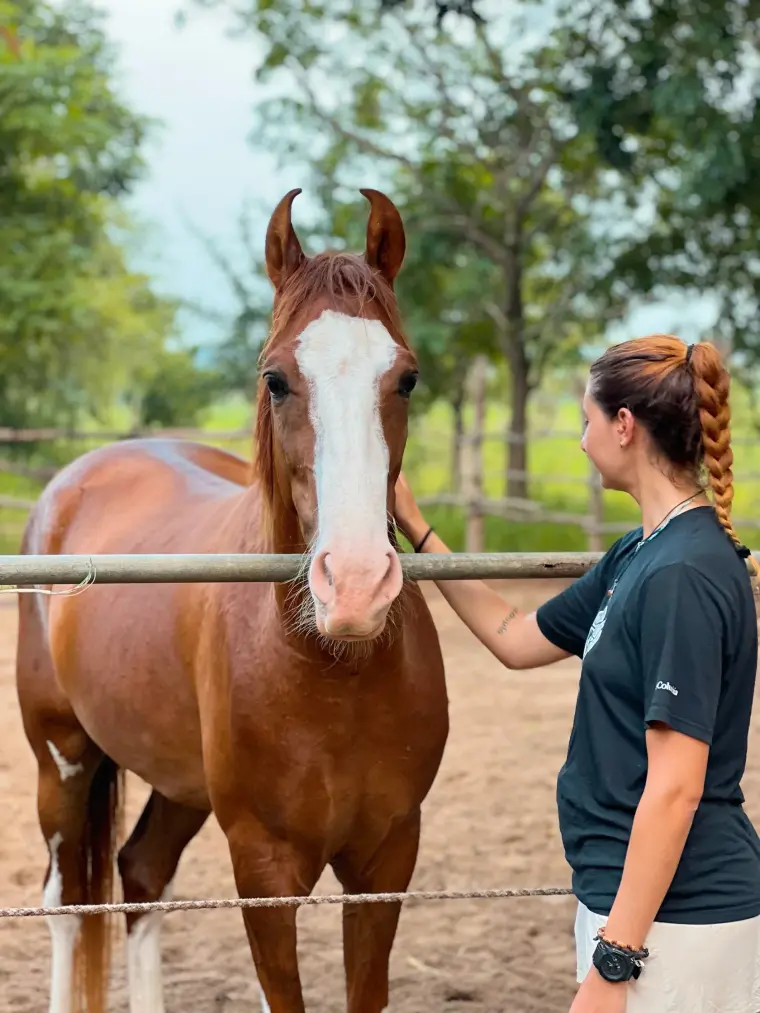
The Marwari horse carries ears that curve inward until the tips meet, or nearly meet, above the poll, forming a loose arch. No other feature identifies the breed as quickly. No other feature is as widely misread.
Guests arriving at Vonfidel Ranch usually notice the ears before they notice anything else. It is understandable. The curve is striking, and Sri Lanka offers no other place to see it. The Marwari horses kept here in Punanai are, to the best of our knowledge, the only horses of the breed in this region. So the questions come early, and they are always the same. Are the ears natural. Do they help the horse hear. Were they bred for war.
The honest answers are shorter than the folklore.
Where the ear comes from
The Marwari takes its name from Marwar, the old desert kingdom around Jodhpur in what is now Rajasthan, north-west India. The breed was developed over centuries by the Rathore clans as a cavalry horse, selected for endurance in dry heat, sure footing over broken ground, and loyalty under pressure. The inward-turning ear travelled with that selection. Over time it became the visible mark of the breed itself, so much so that in traditional assessment the ear is treated as a first test of purity. A Marwari whose ears do not curve is regarded with suspicion long before anyone examines its legs.
The related Kathiawari of Gujarat shares the trait, and the Sindhi horses of the Indus region, which we also keep, show the family resemblance in a softer form. The curve, in other words, is not an accident of one bloodline. It is a signature carried across the horse cultures of north-west South Asia.
What the ear does, and what it does not
The romantic version says the curled ear gave warhorses superior hearing, that a Marwari could detect an enemy before its rider could, and that the ears could rotate nearly a full half circle to track sound. Some of this is true in the ordinary way it is true of most horses. Equine ears are mobile, expressive, and acutely tuned. A horse’s hearing does not need improvement from cosmetic curvature, and there is no sound evidence that the arch changes what the animal hears.
What the curve reliably tells you is ancestry. It is an inheritance, not an instrument. The Rathores prized it, guarded it, and bred for it, and the ear survived as a living record of that choice. When you stand beside a Marwari in the Eastern Province of Sri Lanka and watch the tips draw together, you are looking at several hundred years of deliberate selection carried a long way from home.
That is remarkable enough. It does not need embellishment.
How we read ears at Vonfidel
Guests photograph the ears. We read them.
That is the working difference between admiring a horse and handling one. On any trail out of Punanai, across the open grass, past the seasonal waterways, through scrub where wild animals move at their own discretion, the ears are the first line of the horse’s commentary. One ear turned back is a horse listening to its rider. Both ears fixed forward and rigid is a horse that has noticed something the rider has not. Ears in loose, easy motion belong to a horse that is comfortable in its work.
None of this is unique to the Marwari. Every sound horse speaks this way. But the Marwari’s arch makes the conversation unusually legible. The curve exaggerates every movement, so a shift of attention that might be missed on another horse is unmistakable here. For a guide reading the country ahead, that legibility is worth more than any legend about battlefield hearing. It is one of the quiet reasons these horses suit the way we ride, which depends on the horse’s judgement as much as ours.
The feature is not the horse
There is a caution inside all of this. A breed known for one photogenic trait attracts attention for that trait alone, and attention of that kind can distort breeding, marketing, and care. A Marwari is not a pair of ears. It is a desert-bred saddle horse of considerable stamina, a settled temperament when handled fairly, and a long memory for both good treatment and bad. Those qualities decide whether a horse thrives in monsoon country.
The ears decide nothing except how quickly a visitor reaches for a camera.
At Vonfidel Ranch the ears are welcome to be admired, and they will be. Our obligation runs to the whole animal underneath them, its workload, its rest, its condition through the wet months and the dry. That obligation would be identical if every ear on the property pointed straight up.
The curve is the breed’s signature. The welfare is ours.
By Alfie Ameer
The Marwari horse carries ears that curve inward until the tips meet, or nearly meet, above the poll, forming a loose arch. No other feature identifies the breed as quickly. No other feature is as widely misread.
Guests arriving at Vonfidel Ranch usually notice the ears before they notice anything else. It is understandable. The curve is striking, and Sri Lanka offers no other place to see it. The Marwari horses kept here in Punanai are, to the best of our knowledge, the only horses of the breed in this region. So the questions come early, and they are always the same. Are the ears natural. Do they help the horse hear. Were they bred for war.
The honest answers are shorter than the folklore.
Where the ear comes from
The Marwari takes its name from Marwar, the old desert kingdom around Jodhpur in what is now Rajasthan, north-west India. The breed was developed over centuries by the Rathore clans as a cavalry horse, selected for endurance in dry heat, sure footing over broken ground, and loyalty under pressure. The inward-turning ear travelled with that selection. Over time it became the visible mark of the breed itself, so much so that in traditional assessment the ear is treated as a first test of purity. A Marwari whose ears do not curve is regarded with suspicion long before anyone examines its legs.
The related Kathiawari of Gujarat shares the trait, and the Sindhi horses of the Indus region, which we also keep, show the family resemblance in a softer form. The curve, in other words, is not an accident of one bloodline. It is a signature carried across the horse cultures of north-west South Asia.
What the ear does, and what it does not
The romantic version says the curled ear gave warhorses superior hearing, that a Marwari could detect an enemy before its rider could, and that the ears could rotate nearly a full half circle to track sound. Some of this is true in the ordinary way it is true of most horses. Equine ears are mobile, expressive, and acutely tuned. A horse’s hearing does not need improvement from cosmetic curvature, and there is no sound evidence that the arch changes what the animal hears.
What the curve reliably tells you is ancestry. It is an inheritance, not an instrument. The Rathores prized it, guarded it, and bred for it, and the ear survived as a living record of that choice. When you stand beside a Marwari in the Eastern Province of Sri Lanka and watch the tips draw together, you are looking at several hundred years of deliberate selection carried a long way from home.
That is remarkable enough. It does not need embellishment.
How we read ears at Vonfidel
Guests photograph the ears. We read them.
That is the working difference between admiring a horse and handling one. On any trail out of Punanai, across the open grass, past the seasonal waterways, through scrub where wild animals move at their own discretion, the ears are the first line of the horse’s commentary. One ear turned back is a horse listening to its rider. Both ears fixed forward and rigid is a horse that has noticed something the rider has not. Ears in loose, easy motion belong to a horse that is comfortable in its work.
None of this is unique to the Marwari. Every sound horse speaks this way. But the Marwari’s arch makes the conversation unusually legible. The curve exaggerates every movement, so a shift of attention that might be missed on another horse is unmistakable here. For a guide reading the country ahead, that legibility is worth more than any legend about battlefield hearing. It is one of the quiet reasons these horses suit the way we ride, which depends on the horse’s judgement as much as ours.
The feature is not the horse
There is a caution inside all of this. A breed known for one photogenic trait attracts attention for that trait alone, and attention of that kind can distort breeding, marketing, and care. A Marwari is not a pair of ears. It is a desert-bred saddle horse of considerable stamina, a settled temperament when handled fairly, and a long memory for both good treatment and bad. Those qualities decide whether a horse thrives in monsoon country.
The ears decide nothing except how quickly a visitor reaches for a camera.
At Vonfidel Ranch the ears are welcome to be admired, and they will be. Our obligation runs to the whole animal underneath them, its workload, its rest, its condition through the wet months and the dry. That obligation would be identical if every ear on the property pointed straight up.
The curve is the breed’s signature. The welfare is ours.