
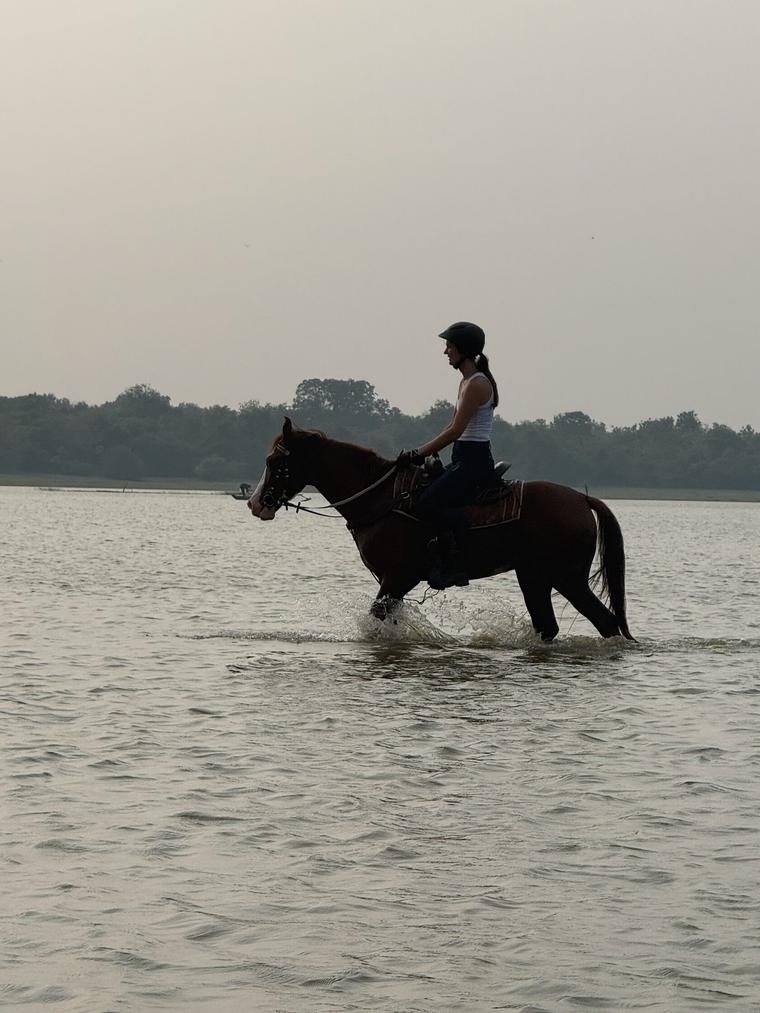
The horses at Vonfidel Ranch were never meant for jungle. Marwari and Sindhi bloodlines trace back to the arid plains of northern India, bred over centuries for war, endurance, and survival in dry heat and open country. Nothing about that inheritance points toward a humid coastline in eastern Sri Lanka, with its mangrove-fringed trails, water crossings, and thick, moisture-laden air. And yet these are the horses that carry guests across the ranch’s terrain, and have done so for years.
The herd didn’t start this way. The early years relied on off-the-track thoroughbreds — race-bred animals looking for a slower, more purposeful second career once their track days ended. Over time, the ranch shifted toward Marwari and Sindhi horses instead, breeds prized less for speed than for something harder to teach: a steadiness under uncertainty, and the kind of physical toughness that holds up over long days and difficult ground. The distinctive inward-curving ear of the Marwari has made the breed something of a visual signature in parts of the world, but that was never the reason for the choice. What mattered was temperament — horses that think before they react, and hold their composure on paths that shift with every rainy season.
Moving a breed several thousand kilometres from the climate it evolved for is not a simple transplant. It is closer to a long negotiation. Coats, feeding, and hydration all have to be re-learned for a climate the horse’s ancestors never faced. Footing that would be unremarkable on dry plains — mud after monsoon rain, a stream crossing after a week of storms — asks something different of a horse bred for sand and scrub. The ranch’s term for this ongoing work, tropical horsemanship, is less a marketing phrase than a description of a daily discipline: matching inherited toughness to unfamiliar conditions, one season and one horse at a time, without shortcuts.
The herd didn’t start this way. The early years relied on off-the-track thoroughbreds — race-bred animals looking for a slower, more purposeful second career once their track days ended. Over time, the ranch shifted toward Marwari and Sindhi horses instead, breeds prized less for speed than for something harder to teach: a steadiness under uncertainty, and the kind of physical toughness that holds up over long days and difficult ground. The distinctive inward-curving ear of the Marwari has made the breed something of a visual signature in parts of the world, but that was never the reason for the choice. What mattered was temperament — horses that think before they react, and hold their composure on paths that shift with every rainy season.
Moving a breed several thousand kilometres from the climate it evolved for is not a simple transplant. It is closer to a long negotiation. Coats, feeding, and hydration all have to be re-learned for a climate the horse’s ancestors never faced. Footing that would be unremarkable on dry plains — mud after monsoon rain, a stream crossing after a week of storms — asks something different of a horse bred for sand and scrub. The ranch’s term for this ongoing work, tropical horsemanship, is less a marketing phrase than a description of a daily discipline: matching inherited toughness to unfamiliar conditions, one season and one horse at a time, without shortcuts.
None of this shows up in a photograph. A horse standing calmly at a river crossing looks unremarkable from the saddle — which is rather the point. The stillness is the result of years of exposure, correction, and trust-building that guests never see and were never meant to. A horse that startles at water, or resists an unfamiliar trail, has usually been asked to adapt too quickly, or without enough care taken over how it was introduced to a landscape so far from its origins.
There is something quietly instructive in keeping horses bred for one world and asking them, patiently, to belong to another. It requires an attentiveness that can’t be improvised — reading a horse’s comfort in humidity it wasn’t built for, recognising fatigue that would never register on the plains its bloodline came from. Vonfidel Ranch treats that adjustment as an ongoing responsibility rather than a completed fact. The horses did not choose Sri Lanka. What they were given, in return for making the crossing, was time, patient handling, and riders willing to move at the horse’s pace rather than the itinerary’s.
That, more than any landscape or itinerary, is what a guest is actually sitting on top of when they arrive for a riding holiday at Vonfidel Ranch: an animal shaped by one geography, living carefully within another.
There is something quietly instructive in keeping horses bred for one world and asking them, patiently, to belong to another. It requires an attentiveness that can’t be improvised — reading a horse’s comfort in humidity it wasn’t built for, recognising fatigue that would never register on the plains its bloodline came from. Vonfidel Ranch treats that adjustment as an ongoing responsibility rather than a completed fact. The horses did not choose Sri Lanka. What they were given, in return for making the crossing, was time, patient handling, and riders willing to move at the horse’s pace rather than the itinerary’s.
That, more than any landscape or itinerary, is what a guest is actually sitting on top of when they arrive for a riding holiday at Vonfidel Ranch: an animal shaped by one geography, living carefully within another.
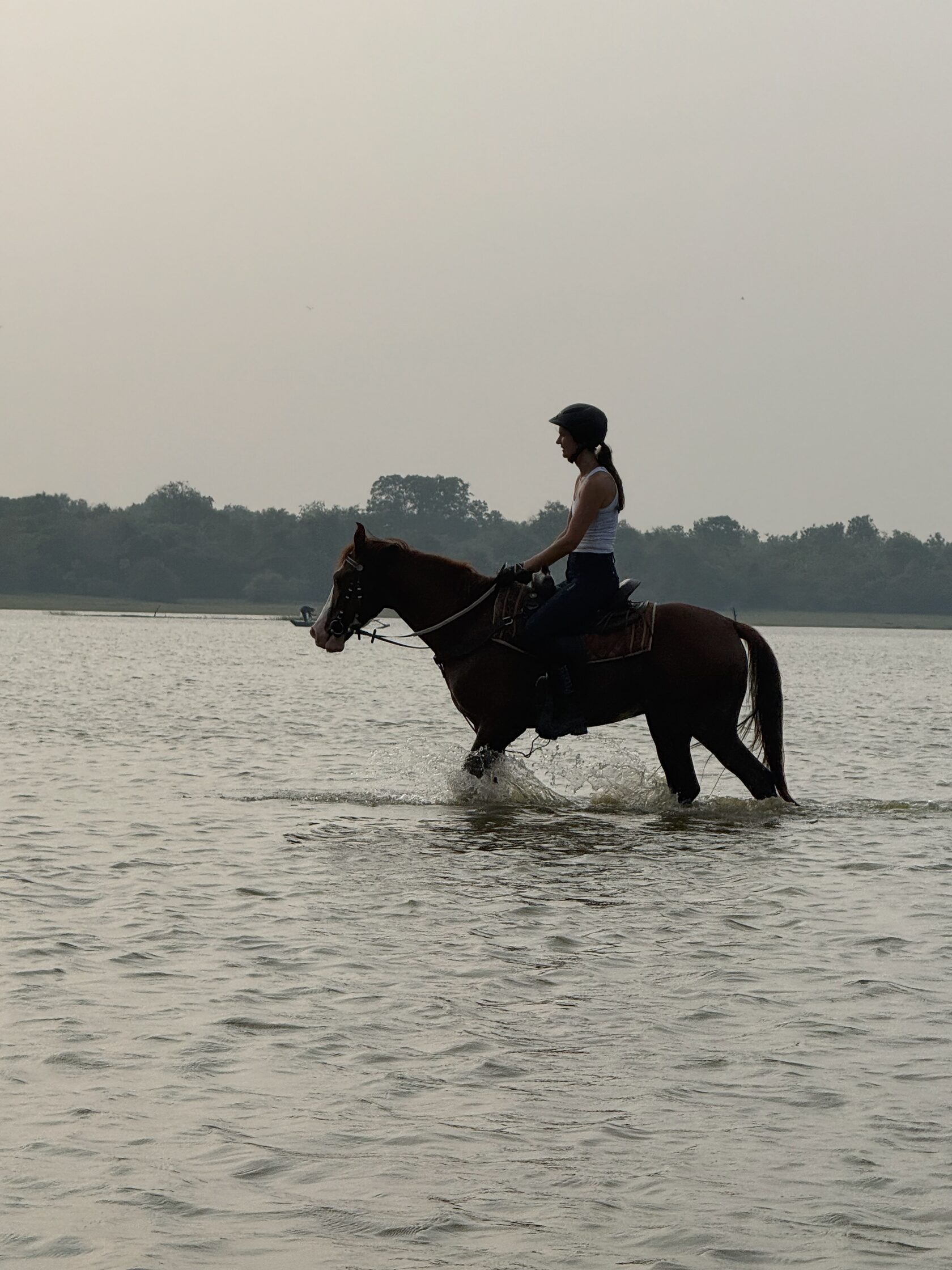
None of this shows up in a photograph. A horse standing calmly at a river crossing looks unremarkable from the saddle — which is rather the point. The stillness is the result of years of exposure, correction, and trust-building that guests never see and were never meant to. A horse that startles at water, or resists an unfamiliar trail, has usually been asked to adapt too quickly, or without enough care taken over how it was introduced to a landscape so far from its origins.
There is something quietly instructive in keeping horses bred for one world and asking them, patiently, to belong to another. It requires an attentiveness that can’t be improvised — reading a horse’s comfort in humidity it wasn’t built for, recognising fatigue that would never register on the plains its bloodline came from. Vonfidel Ranch treats that adjustment as an ongoing responsibility rather than a completed fact. The horses did not choose Sri Lanka. What they were given, in return for making the crossing, was time, patient handling, and riders willing to move at the horse’s pace rather than the itinerary’s.
That, more than any landscape or itinerary, is what a guest is actually sitting on top of when they arrive for a riding holiday at Vonfidel Ranch: an animal shaped by one geography, living carefully within another.
There is something quietly instructive in keeping horses bred for one world and asking them, patiently, to belong to another. It requires an attentiveness that can’t be improvised — reading a horse’s comfort in humidity it wasn’t built for, recognising fatigue that would never register on the plains its bloodline came from. Vonfidel Ranch treats that adjustment as an ongoing responsibility rather than a completed fact. The horses did not choose Sri Lanka. What they were given, in return for making the crossing, was time, patient handling, and riders willing to move at the horse’s pace rather than the itinerary’s.
That, more than any landscape or itinerary, is what a guest is actually sitting on top of when they arrive for a riding holiday at Vonfidel Ranch: an animal shaped by one geography, living carefully within another.