
Most of the horsekeeping literature available to an owner in Asia was written for another hemisphere. The manuals assume cold winters, closed barns, and a season in which the land rests. None of that applies here. The temperate manual treats cold as the enemy. In the tropics, the enemy is moisture. Once that single substitution is understood, almost every management decision follows from it. This is the discipline we call tropical horsemanship, and it is learned in the field, not inherited from books written for other climates.
What follows is not a list of tips. It is the working logic behind how horses are kept at Vonfidel Ranch, in the low country of eastern Sri Lanka, where heat, humidity, and insect pressure never take a season off.
Air Before Architecture
The instinct of a new owner in the tropics is to build a handsome enclosed stable, because that is what a stable looks like in the photographs. It is usually a mistake. A closed structure in this climate traps heat and holds humid air against the horse for hours, and the respiratory system pays the bill. The correct priority is airflow. Open-sided shelters, high rooflines, and orientation to the prevailing breeze do more for equine health than any expensive fitting.
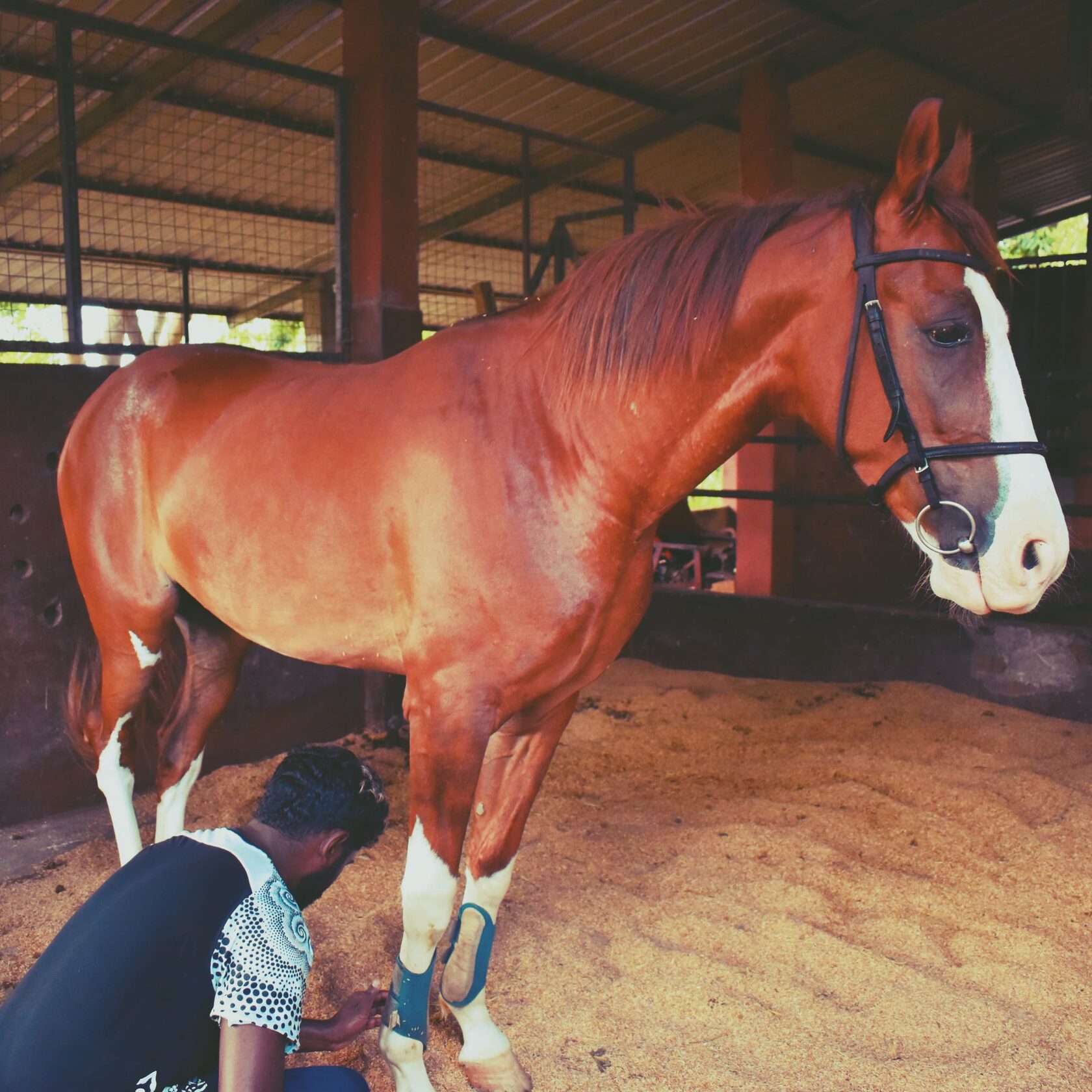
Flooring deserves the same reversal of instinct. Concrete is easy to wash and hard on everything else. Properly installed sand floors stay cooler, drain well, and are far kinder to hooves that already contend with a wet climate. The word properly matters. Sand flooring installed without drainage planning creates a different set of problems, and we have seen the results of shortcuts. Owners considering the conversion are welcome to write to us before committing to a design.
Shade is the final element, and living shade outperforms built shade. A mature tree cools the ground beneath it in a way a roof cannot, and a horse given the choice will tell you so every afternoon.
Water and Salt
A horse working in tropical heat can drink well over a hundred liters of water in a day. The figure surprises visitors, but it should govern everything about how water is offered. Troughs must be clean, shaded where possible, and never allowed to run low on the assumption that someone will get to it later. In this climate, later is too late.
Sweat costs the horse more than water. It drains salts, and a horse that loses electrolytes faster than it replaces them will fade in condition long before it shows obvious distress. Free-choice salt and a considered electrolyte program are not refinements for competition yards. They are baseline management for any horse worked seriously in the heat.
Feeding on Tropical Grass
The grasses of the tropics are generous in volume and modest in nutrition. Guinea and Bermuda make honest forage, but a horse in regular work cannot hold condition on them alone. The gap must be closed deliberately, through quality hay where it can be sourced, appropriate concentrates, and consistent mineral and vitamin supplementation. In Sri Lanka we feed Rubicon Gold, the supplement developed alongside our own horses, because we could not find an existing product built for these conditions.
The principle beneath the product is what matters. Feeding in the tropics is a calculation, not a routine. Body condition should be assessed by hand and eye every week, and the ration adjusted to the horse in front of you rather than the horse described in a feeding chart.
The Insect Problem
No temperate horsekeeper fully appreciates what insect pressure means until they have stood in a tropical paddock at dusk. Flies, mosquitoes, and ticks are not a nuisance here. They are a vector for disease and a constant tax on the horse’s condition. Tick-borne piroplasmosis and the parasitic condition known locally as kumri are both present in this region, and both are easier to prevent than to treat.
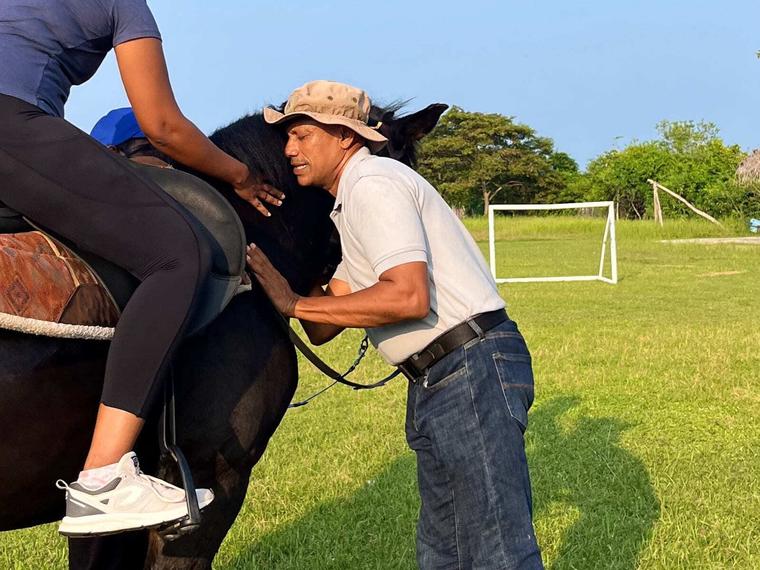
The response has to be layered. Stable hygiene removes breeding ground. Daily grooming doubles as tick inspection, and the ears deserve particular attention, since they are the site most owners neglect and most horses learn to defend. A horse trained calmly to accept ear handling is easier to protect for the rest of its life. Repellents and traps have their place, but they sit on top of hygiene and handling, never in place of them.
There is a secondary cost worth naming. A horse tormented by flies stamps, and a horse that stamps all day is loading its limbs and hooves with thousands of unnecessary concussions. Fly control is limb care by another name.
Disease and the Discipline of Biosecurity
Vaccination schedules should be built with a veterinarian who knows the local disease picture, not copied from a foreign yard. Tetanus and influenza protection form the core, with regional additions decided case by case. The less glamorous half of disease prevention is biosecurity. Every new arrival is quarantined before joining the herd. Shared equipment is disinfected. These habits feel excessive until the year they save you, and every established yard in the tropics has such a year in its history.
Skin and Hooves in a Wet Climate
Persistent moisture produces its own pathology. Rain rot appears where wet coats go unattended, and light-skinned horses burn under the same sun that tans their handlers. Daily grooming, sensible turnout timing, and access to shade prevent most of it.
Hooves suffer more quietly. A hoof that stands in wet ground softens, and a softened hoof invites thrush and abscess. The remedy is mostly environmental. Paddocks and stables must drain, and a horse should have somewhere dry to stand every day of the year. Topical preparations help at the margins, but drainage is the treatment. Everything else is maintenance.
Working a Horse in Heat
The training day in the tropics belongs to the early morning and the late evening. The hours between are for rest, shade, and water. Fitness must be built gradually in this climate, because heat adds a load that the stopwatch does not measure, and a horse pushed to temperate-climate workloads without acclimatization will break down in ways that take months to repair.
Recovery deserves the same seriousness as work. Hosing down after exercise, walking out in shade, and monitoring for the quiet signs of heat stress, the dullness and the elevated breathing that precede real trouble, are part of the ride, not an afterthought to it.
The Horse’s Mind
A horse kept sound in body and dull in mind is only half kept. Horses are herd animals, and the tropics offer no exemption from that fact. Turnout with companions, grazing time, and varied ground to move over keep a horse mentally settled, and a settled horse is safer for everyone who handles it.
The Owner’s Responsibility
The most important resource in tropical horsekeeping is not a product or a structure. It is the owner’s own knowledge. In Sri Lanka especially, it is common for owners to delegate everything to staff and hope for the best. Staff can be excellent, but judgment cannot be delegated. The owner who understands why the water trough matters, why the ears are checked, and why the yard drains the way it does will keep horses that thrive here for decades. That understanding is what tropical horsemanship means in practice, and it is available to anyone willing to learn from the animal in front of them.
What follows is not a list of tips. It is the working logic behind how horses are kept at Vonfidel Ranch, in the low country of eastern Sri Lanka, where heat, humidity, and insect pressure never take a season off.
Air Before Architecture
The instinct of a new owner in the tropics is to build a handsome enclosed stable, because that is what a stable looks like in the photographs. It is usually a mistake. A closed structure in this climate traps heat and holds humid air against the horse for hours, and the respiratory system pays the bill. The correct priority is airflow. Open-sided shelters, high rooflines, and orientation to the prevailing breeze do more for equine health than any expensive fitting.
Flooring deserves the same reversal of instinct. Concrete is easy to wash and hard on everything else. Properly installed sand floors stay cooler, drain well, and are far kinder to hooves that already contend with a wet climate. The word properly matters. Sand flooring installed without drainage planning creates a different set of problems, and we have seen the results of shortcuts. Owners considering the conversion are welcome to write to us before committing to a design.
Shade is the final element, and living shade outperforms built shade. A mature tree cools the ground beneath it in a way a roof cannot, and a horse given the choice will tell you so every afternoon.
Water and Salt
A horse working in tropical heat can drink well over a hundred liters of water in a day. The figure surprises visitors, but it should govern everything about how water is offered. Troughs must be clean, shaded where possible, and never allowed to run low on the assumption that someone will get to it later. In this climate, later is too late.
Sweat costs the horse more than water. It drains salts, and a horse that loses electrolytes faster than it replaces them will fade in condition long before it shows obvious distress. Free-choice salt and a considered electrolyte program are not refinements for competition yards. They are baseline management for any horse worked seriously in the heat.
Feeding on Tropical Grass
The grasses of the tropics are generous in volume and modest in nutrition. Guinea and Bermuda make honest forage, but a horse in regular work cannot hold condition on them alone. The gap must be closed deliberately, through quality hay where it can be sourced, appropriate concentrates, and consistent mineral and vitamin supplementation. In Sri Lanka we feed Rubicon Gold, the supplement developed alongside our own horses, because we could not find an existing product built for these conditions.
The principle beneath the product is what matters. Feeding in the tropics is a calculation, not a routine. Body condition should be assessed by hand and eye every week, and the ration adjusted to the horse in front of you rather than the horse described in a feeding chart.
The Insect Problem
No temperate horsekeeper fully appreciates what insect pressure means until they have stood in a tropical paddock at dusk. Flies, mosquitoes, and ticks are not a nuisance here. They are a vector for disease and a constant tax on the horse’s condition. Tick-borne piroplasmosis and the parasitic condition known locally as kumri are both present in this region, and both are easier to prevent than to treat.
The response has to be layered. Stable hygiene removes breeding ground. Daily grooming doubles as tick inspection, and the ears deserve particular attention, since they are the site most owners neglect and most horses learn to defend. A horse trained calmly to accept ear handling is easier to protect for the rest of its life. Repellents and traps have their place, but they sit on top of hygiene and handling, never in place of them.
There is a secondary cost worth naming. A horse tormented by flies stamps, and a horse that stamps all day is loading its limbs and hooves with thousands of unnecessary concussions. Fly control is limb care by another name.
Disease and the Discipline of Biosecurity
Vaccination schedules should be built with a veterinarian who knows the local disease picture, not copied from a foreign yard. Tetanus and influenza protection form the core, with regional additions decided case by case. The less glamorous half of disease prevention is biosecurity. Every new arrival is quarantined before joining the herd. Shared equipment is disinfected. These habits feel excessive until the year they save you, and every established yard in the tropics has such a year in its history.
Skin and Hooves in a Wet Climate
Persistent moisture produces its own pathology. Rain rot appears where wet coats go unattended, and light-skinned horses burn under the same sun that tans their handlers. Daily grooming, sensible turnout timing, and access to shade prevent most of it.
Hooves suffer more quietly. A hoof that stands in wet ground softens, and a softened hoof invites thrush and abscess. The remedy is mostly environmental. Paddocks and stables must drain, and a horse should have somewhere dry to stand every day of the year. Topical preparations help at the margins, but drainage is the treatment. Everything else is maintenance.
Working a Horse in Heat
The training day in the tropics belongs to the early morning and the late evening. The hours between are for rest, shade, and water. Fitness must be built gradually in this climate, because heat adds a load that the stopwatch does not measure, and a horse pushed to temperate-climate workloads without acclimatization will break down in ways that take months to repair.
Recovery deserves the same seriousness as work. Hosing down after exercise, walking out in shade, and monitoring for the quiet signs of heat stress, the dullness and the elevated breathing that precede real trouble, are part of the ride, not an afterthought to it.
The Horse’s Mind
A horse kept sound in body and dull in mind is only half kept. Horses are herd animals, and the tropics offer no exemption from that fact. Turnout with companions, grazing time, and varied ground to move over keep a horse mentally settled, and a settled horse is safer for everyone who handles it.
The Owner’s Responsibility
The most important resource in tropical horsekeeping is not a product or a structure. It is the owner’s own knowledge. In Sri Lanka especially, it is common for owners to delegate everything to staff and hope for the best. Staff can be excellent, but judgment cannot be delegated. The owner who understands why the water trough matters, why the ears are checked, and why the yard drains the way it does will keep horses that thrive here for decades. That understanding is what tropical horsemanship means in practice, and it is available to anyone willing to learn from the animal in front of them.