
By Alfie Ameer
Every guest who spends time on these pages eventually arrives at the Vonfidel Doctrine, and some of them ask why a small ranch in Eastern Sri Lanka bothers to keep a written code at all. It is a fair question. No welfare inspectorate rides out to Punanai to examine our horses, and no licensing body measures how they are worked. If a horse here were pushed past its limits, the only witnesses would be the scrub plains and the horse itself.
That is precisely why the code is written down. A standard that lives only in a man’s head bends whenever the man is tired, or the guest is persuasive, or the season has been lean. A written standard does not bend. It sits on the page and says no on the days when saying no is expensive. Most of what our doctrine governs is invisible to guests. It decides when a horse rests regardless of demand, and when a ride is declined regardless of payment. It ends a day early when the heat says so, even if the riders would gladly have continued.
For years I assumed this instinct was simply the residue of a military career. Write the order down, then obey it. Then I found older company.
The Long Riders’ Guild, founded in 1994, is the world’s first international association of equestrian explorers. Membership is reserved for those who have made a continuous journey of a thousand miles or more in the saddle, and its members have ridden through nearly every imaginable country and climate. What sets the Guild apart is not the mileage. It is the code. The Guild maintains a formal Code of Equestrian Ethics, a public declaration that the welfare of the horse can never be compromised for any human ambition. The Guild pledges that it “will never tolerate any abuse to the road horse or pack animal”, and it enforces the pledge. Claimed journeys are investigated and verified before they are recognized. Those found to have harmed horses in pursuit of glory are named in a public record and never admitted.
The Guild’s pages also preserve the history of what happens when no such code exists. In 1892, German and Austrian cavalry officers raced between Berlin and Vienna for the honor of their regiments. By the Guild’s account, dozens of horses were ridden to death in a matter of days, kept moving at the end by morphine and brandy while the officers rode on in their fine uniforms. Nothing about that story is safely historical. The Guild has written at length about the modern version, in which horses serve as props for social media stunts and record attempts, ridden hard for an audience that never sees the aftermath.
Reading their code from Punanai, I recognized the architecture of our own. A code must cost something to mean something. The Guild turns away accomplished riders who fail its ethical test, exactly as it should. We decline bookings that would push a horse past its welfare threshold, and we do not advertise the refusals. The Guild’s members cross continents, while our horses move through grazing country and seasonal waterways and return to the same stable by evening. The obligation does not shrink with the distance.
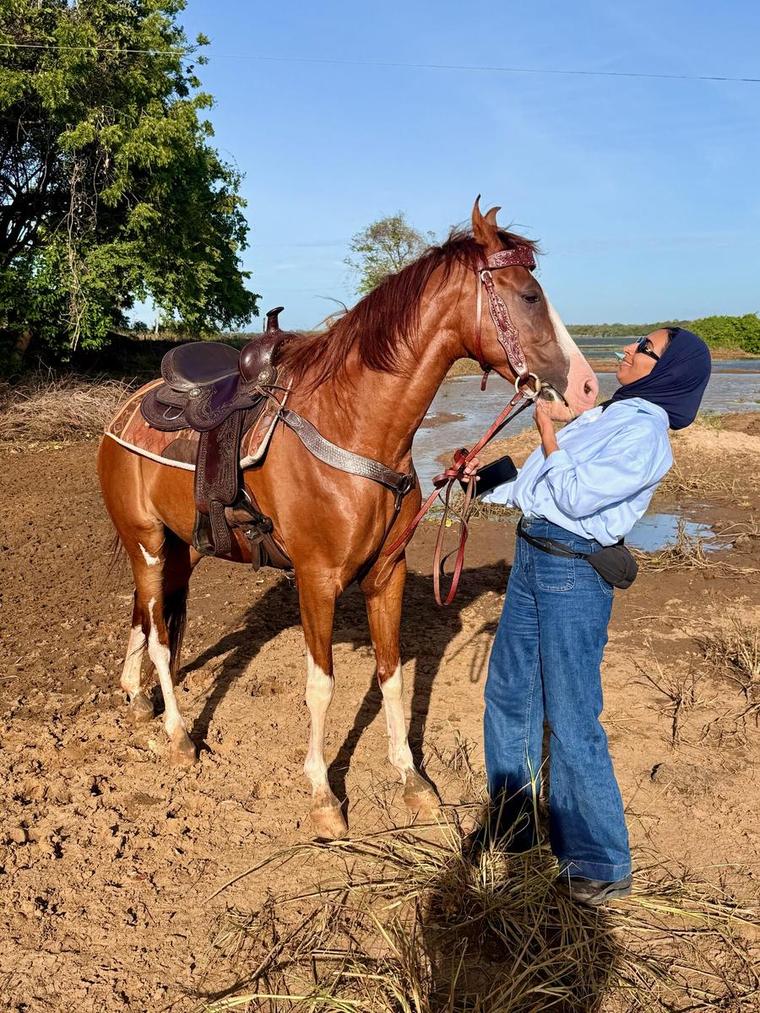
That obligation is heavier here than it might first appear. Our Marwari and Sindhi horses are desert-bred animals living and working in monsoon country. Managing that responsibly has meant years of observation on heat load, hoof condition through the seasonal wet, forage adaptation, and workload ceilings that hold even in peak season. None of this fits neatly into a brochure, and a doctrine was never meant to. It earns its keep on the Tuesday afternoon when the paying guest wants one more hour and the horse has given enough.
There is a quiet comfort in learning that the standard you hold in isolation is held elsewhere, by people who have tested it across forty countries. When we write on our own pages that welfare determines the pace, the route, and the limits of what we offer, we are not describing a preference. We are describing a rule that has already cost us revenue and will cost us more, willingly. The Long Riders’ Guild wrote that rule for the whole world to read, long before we wrote ours for one corner of the Eastern Province. Their Code of Equestrian Ethics deserves the attention of anyone who puts a leg over a horse, whether they ride a thousand miles or one.
A doctrine, it turns out, keeps company. We are glad to know ours is in good standing.
The Long Riders’ Guild Code of Equestrian Ethics is published at thelongridersguild.com. The Vonfidel Doctrine is available in full on this site.
Every guest who spends time on these pages eventually arrives at the Vonfidel Doctrine, and some of them ask why a small ranch in Eastern Sri Lanka bothers to keep a written code at all. It is a fair question. No welfare inspectorate rides out to Punanai to examine our horses, and no licensing body measures how they are worked. If a horse here were pushed past its limits, the only witnesses would be the scrub plains and the horse itself.
That is precisely why the code is written down. A standard that lives only in a man’s head bends whenever the man is tired, or the guest is persuasive, or the season has been lean. A written standard does not bend. It sits on the page and says no on the days when saying no is expensive. Most of what our doctrine governs is invisible to guests. It decides when a horse rests regardless of demand, and when a ride is declined regardless of payment. It ends a day early when the heat says so, even if the riders would gladly have continued.
For years I assumed this instinct was simply the residue of a military career. Write the order down, then obey it. Then I found older company.
The Long Riders’ Guild, founded in 1994, is the world’s first international association of equestrian explorers. Membership is reserved for those who have made a continuous journey of a thousand miles or more in the saddle, and its members have ridden through nearly every imaginable country and climate. What sets the Guild apart is not the mileage. It is the code. The Guild maintains a formal Code of Equestrian Ethics, a public declaration that the welfare of the horse can never be compromised for any human ambition. The Guild pledges that it “will never tolerate any abuse to the road horse or pack animal”, and it enforces the pledge. Claimed journeys are investigated and verified before they are recognized. Those found to have harmed horses in pursuit of glory are named in a public record and never admitted.
The Guild’s pages also preserve the history of what happens when no such code exists. In 1892, German and Austrian cavalry officers raced between Berlin and Vienna for the honor of their regiments. By the Guild’s account, dozens of horses were ridden to death in a matter of days, kept moving at the end by morphine and brandy while the officers rode on in their fine uniforms. Nothing about that story is safely historical. The Guild has written at length about the modern version, in which horses serve as props for social media stunts and record attempts, ridden hard for an audience that never sees the aftermath.
Reading their code from Punanai, I recognized the architecture of our own. A code must cost something to mean something. The Guild turns away accomplished riders who fail its ethical test, exactly as it should. We decline bookings that would push a horse past its welfare threshold, and we do not advertise the refusals. The Guild’s members cross continents, while our horses move through grazing country and seasonal waterways and return to the same stable by evening. The obligation does not shrink with the distance.
That obligation is heavier here than it might first appear. Our Marwari and Sindhi horses are desert-bred animals living and working in monsoon country. Managing that responsibly has meant years of observation on heat load, hoof condition through the seasonal wet, forage adaptation, and workload ceilings that hold even in peak season. None of this fits neatly into a brochure, and a doctrine was never meant to. It earns its keep on the Tuesday afternoon when the paying guest wants one more hour and the horse has given enough.
There is a quiet comfort in learning that the standard you hold in isolation is held elsewhere, by people who have tested it across forty countries. When we write on our own pages that welfare determines the pace, the route, and the limits of what we offer, we are not describing a preference. We are describing a rule that has already cost us revenue and will cost us more, willingly. The Long Riders’ Guild wrote that rule for the whole world to read, long before we wrote ours for one corner of the Eastern Province. Their Code of Equestrian Ethics deserves the attention of anyone who puts a leg over a horse, whether they ride a thousand miles or one.
A doctrine, it turns out, keeps company. We are glad to know ours is in good standing.
The Long Riders’ Guild Code of Equestrian Ethics is published at thelongridersguild.com. The Vonfidel Doctrine is available in full on this site.