
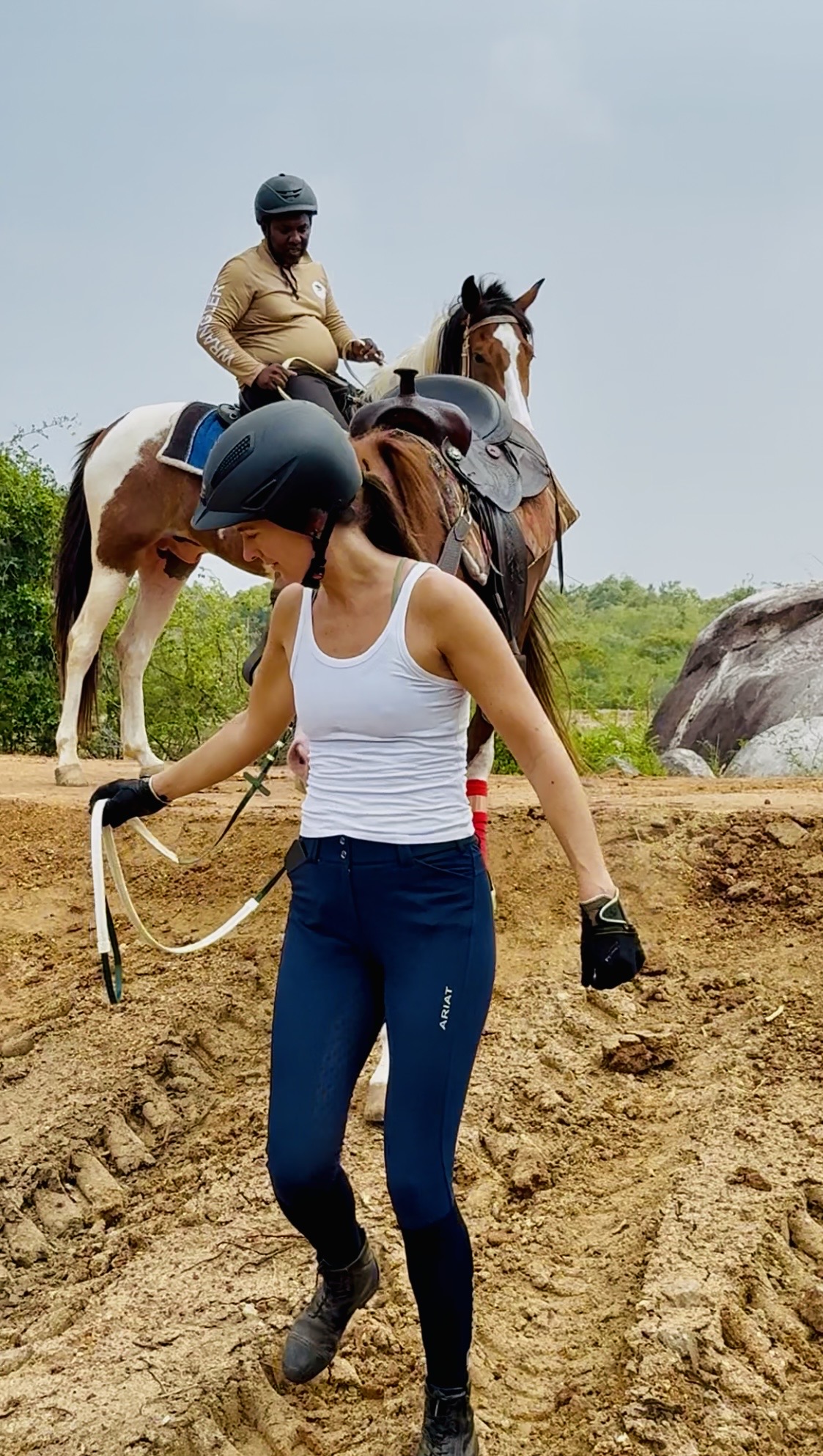
At Vonfidel Ranch, the ride begins long before the saddle.
A serious trail ride does not begin at the mounting block.
It begins earlier — with the land, the weather, the horses, and the judgment required to decide whether the conditions are truly right for the experience ahead.
At Vonfidel Ranch, that process is not treated as a checklist or a procedural exercise. It forms part of the operational rhythm of the Ranch itself, shaped over years of working with horses in Sri Lanka’s dry-zone terrain and by a belief that good horsemanship depends as much on restraint as it does on movement.
Conditions here change quickly.
Ground that felt forgiving days earlier can tighten under heat, soften unexpectedly after rain, or become uneven through natural movement and use. Water levels shift. Shade changes. Humidity builds differently across the day. Even the quality of the air and heat settling into the country can alter how a horse carries itself over distance.
A route that worked beautifully one week may require adjustment the next.
Occasionally, the correct decision is to shorten a ride. Sometimes it is to leave earlier. On certain days, it may mean not riding at all.
We consider that part of responsible horsemanship rather than inconvenience.
Our riding holidays remain deliberately low-volume because careful judgment becomes difficult to maintain at scale. Every ride involves a relationship between horse, rider, terrain, weather, timing, and pace. Once volume becomes the priority, attention usually declines somewhere within that chain.
We have no interest in operating that way.
Before guests ride, routes are considered according to present conditions rather than fixed expectation. Footing, recent rainfall, exposed roots, loose gravel, heat exposure, shaded recovery sections, and overall terrain behavior are all quietly taken into account before a horse is saddled.
The objective is not to push through conditions for the sake of schedule or spectacle.
The horses themselves remain central to every decision made.
At Vonfidel Ranch, horses are rotated carefully and understood individually by temperament, recovery pattern, workload, confidence, and suitability for particular riders and terrain. Heat management is treated seriously because welfare in tropical conditions cannot be separated from riding quality itself.
Rider suitability matters too.
Balance, confidence, experience, physical condition, and riding intention all influence how horses are allocated and how a ride is structured. Honest alignment tends to create calmer horses, safer riding, and ultimately a more meaningful experience for the rider.
Some guests are surprised by this level of attention.
Others specifically seek us out because of it.
Modern travel increasingly rewards speed, visibility, and moments designed primarily for documentation. Equestrian travel has not escaped that pressure. Across much of the world, horseback riding is now frequently shaped around spectacle, social media imagery, or manufactured intensity rather than horsemanship itself.
The Vonfidel Way — the operational practice of the broader Vonfidel Doctrine — moves deliberately in the opposite direction.
We do not build rides around influencer-style drama or moments staged primarily for the camera. We are far more interested in creating experiences that feel calm, grounded, and genuinely connected to the landscape once the noise falls away.
The guests who tend to appreciate the Ranch most are often those seeking precisely that kind of atmosphere: thoughtful horses, measured pacing, honest country, and the quiet confidence that comes from operations shaped by judgment rather than performance.
For us, restraint is not the absence of quality. It is often evidence of discipline.
That philosophy extends beyond riding itself.
Sri Lanka’s interior landscapes remain active and unpredictable. Wildlife movement, changing weather patterns, village activity, seasonal water behavior, and environmental pressure all influence how a route should be approached on a given day. Reading those conditions properly is part of operating responsibly within this environment.
Many of the most important decisions made before a ride are decisions the guest may never directly notice.
A horse may be changed quietly because the conditions favor a steadier temperament. A route may shift because overnight rain altered the ground. Departure timing may move earlier to reduce unnecessary heat exposure later in the day.
Good operations often appear effortless from the outside precisely because the difficult thinking happened beforehand.
At Vonfidel Ranch, we believe the best riding experiences are not forced onto the landscape. They are shaped carefully around it.
That is why our riding holidays remain deliberately limited, terrain-aware, welfare-first, and operationally restrained — principles that sit at the core of the Vonfidel Doctrine.
For guests seeking a quieter and more grounded form of equestrian travel, this is where the experience truly begins.
It begins earlier — with the land, the weather, the horses, and the judgment required to decide whether the conditions are truly right for the experience ahead.
At Vonfidel Ranch, that process is not treated as a checklist or a procedural exercise. It forms part of the operational rhythm of the Ranch itself, shaped over years of working with horses in Sri Lanka’s dry-zone terrain and by a belief that good horsemanship depends as much on restraint as it does on movement.
Conditions here change quickly.
Ground that felt forgiving days earlier can tighten under heat, soften unexpectedly after rain, or become uneven through natural movement and use. Water levels shift. Shade changes. Humidity builds differently across the day. Even the quality of the air and heat settling into the country can alter how a horse carries itself over distance.
A route that worked beautifully one week may require adjustment the next.
Occasionally, the correct decision is to shorten a ride. Sometimes it is to leave earlier. On certain days, it may mean not riding at all.
We consider that part of responsible horsemanship rather than inconvenience.
Our riding holidays remain deliberately low-volume because careful judgment becomes difficult to maintain at scale. Every ride involves a relationship between horse, rider, terrain, weather, timing, and pace. Once volume becomes the priority, attention usually declines somewhere within that chain.
We have no interest in operating that way.
Before guests ride, routes are considered according to present conditions rather than fixed expectation. Footing, recent rainfall, exposed roots, loose gravel, heat exposure, shaded recovery sections, and overall terrain behavior are all quietly taken into account before a horse is saddled.
The objective is not to push through conditions for the sake of schedule or spectacle.
The horses themselves remain central to every decision made.
At Vonfidel Ranch, horses are rotated carefully and understood individually by temperament, recovery pattern, workload, confidence, and suitability for particular riders and terrain. Heat management is treated seriously because welfare in tropical conditions cannot be separated from riding quality itself.
Rider suitability matters too.
Balance, confidence, experience, physical condition, and riding intention all influence how horses are allocated and how a ride is structured. Honest alignment tends to create calmer horses, safer riding, and ultimately a more meaningful experience for the rider.
Some guests are surprised by this level of attention.
Others specifically seek us out because of it.
Modern travel increasingly rewards speed, visibility, and moments designed primarily for documentation. Equestrian travel has not escaped that pressure. Across much of the world, horseback riding is now frequently shaped around spectacle, social media imagery, or manufactured intensity rather than horsemanship itself.
The Vonfidel Way — the operational practice of the broader Vonfidel Doctrine — moves deliberately in the opposite direction.
We do not build rides around influencer-style drama or moments staged primarily for the camera. We are far more interested in creating experiences that feel calm, grounded, and genuinely connected to the landscape once the noise falls away.
The guests who tend to appreciate the Ranch most are often those seeking precisely that kind of atmosphere: thoughtful horses, measured pacing, honest country, and the quiet confidence that comes from operations shaped by judgment rather than performance.
For us, restraint is not the absence of quality. It is often evidence of discipline.
That philosophy extends beyond riding itself.
Sri Lanka’s interior landscapes remain active and unpredictable. Wildlife movement, changing weather patterns, village activity, seasonal water behavior, and environmental pressure all influence how a route should be approached on a given day. Reading those conditions properly is part of operating responsibly within this environment.
Many of the most important decisions made before a ride are decisions the guest may never directly notice.
A horse may be changed quietly because the conditions favor a steadier temperament. A route may shift because overnight rain altered the ground. Departure timing may move earlier to reduce unnecessary heat exposure later in the day.
Good operations often appear effortless from the outside precisely because the difficult thinking happened beforehand.
At Vonfidel Ranch, we believe the best riding experiences are not forced onto the landscape. They are shaped carefully around it.
That is why our riding holidays remain deliberately limited, terrain-aware, welfare-first, and operationally restrained — principles that sit at the core of the Vonfidel Doctrine.
For guests seeking a quieter and more grounded form of equestrian travel, this is where the experience truly begins.