
Most places are defined by what they showcase.
The ride that went ahead.
The distance covered.
The photographs that prove momentum.
But the more time one spends in serious horsemanship, the clearer it becomes that the most revealing moments are often the uneventful ones — the pauses, the hesitations, the days that pass without spectacle.
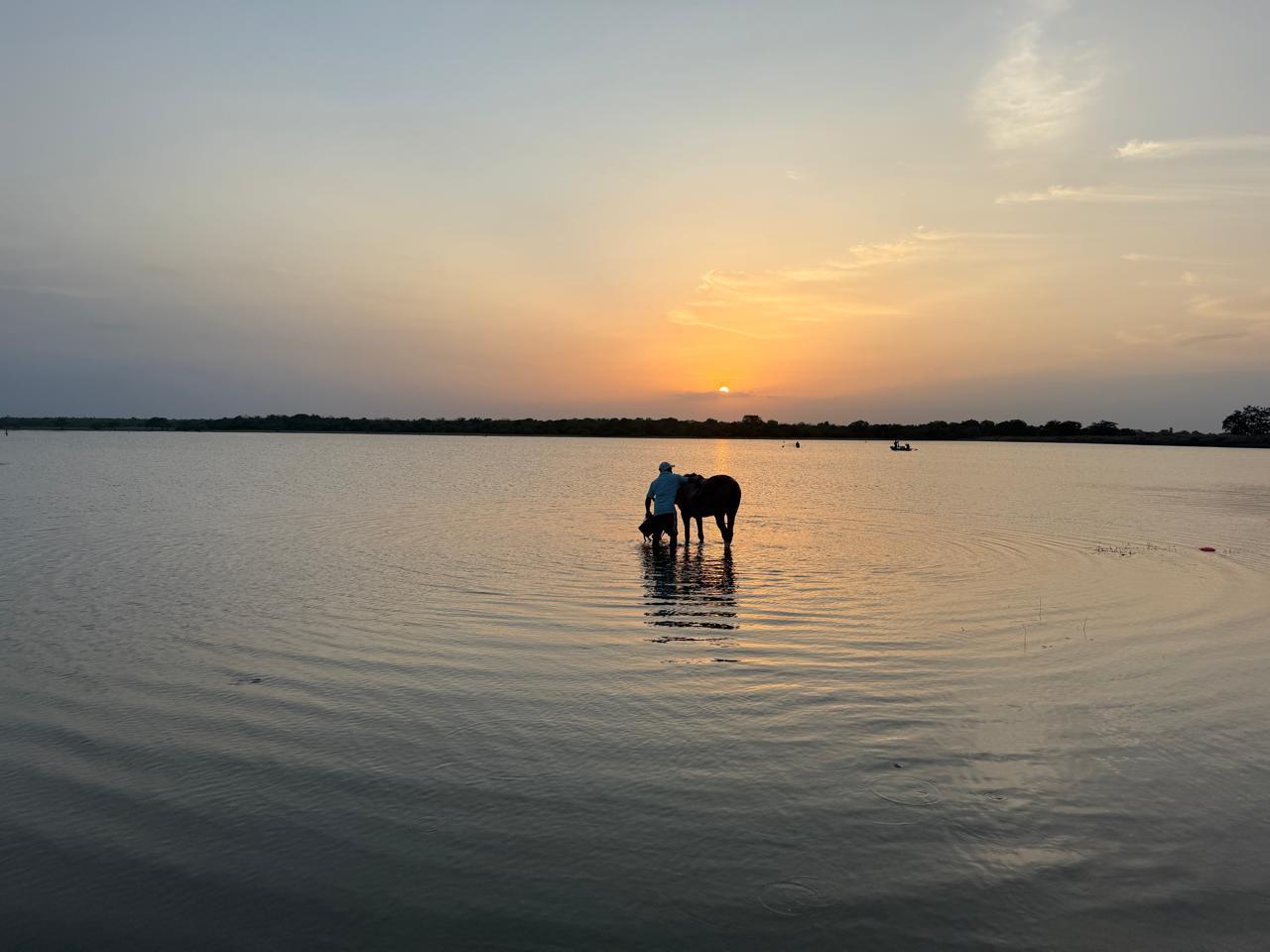
At Vonfidel Ranch, there are hours that leave no trace. No movement through landscape, no mounted progression, no story that can be easily told. To an observer, nothing appears to be happening. Horses are walked, not worked. Saddles remain untouched. Conversations are brief and unremarkable.
These are not empty hours. They are diagnostic.
A horse reveals more when it is not being asked to perform. So does a system. Soundness, tension, willingness, and fatigue surface most clearly in the absence of demand. When nothing is being extracted, what remains is truth.
Modern experience culture struggles with this. It assumes that value must announce itself — through activity, novelty, or visible output. But horsemanship has never worked that way. The horse does not respond to ambition. It responds to conditions. It does not measure effort by intention, only by consequence.
This is why restraint matters.
The decision not to ride is rarely dramatic. It is usually made quietly, based on small deviations that would be invisible to anyone looking for guarantees. Ground that has not fully settled. A rhythm that feels slightly guarded. A horse that complies but does not offer.
None of this constitutes a problem. Together, they constitute information.
A well-run operation does not wait for failure to justify caution. It reads the margins. It acts before explanation becomes necessary.
For guests, this can feel unfamiliar. Travel has trained people to expect delivery — an experience promised, scheduled, and fulfilled regardless of context. But horses are not participants in itineraries. They are partners in a living system that must be respected if it is to endure.
When nothing happens, there is no distraction. One becomes aware of how much of riding is preparation, judgment, and restraint. How little of it is display. The absence of action clarifies priorities: soundness over satisfaction, continuity over impression, care over completion.
These are not values that announce themselves loudly. They are visible only over time, in horses that remain willing, in land that does not degrade, and in decisions that do not need defending because they were made early enough.
In this sense, the quiet days are not interruptions to the work. They are the work.
They are the reason the rest can exist at all.
The ride that went ahead.
The distance covered.
The photographs that prove momentum.
But the more time one spends in serious horsemanship, the clearer it becomes that the most revealing moments are often the uneventful ones — the pauses, the hesitations, the days that pass without spectacle.
At Vonfidel Ranch, there are hours that leave no trace. No movement through landscape, no mounted progression, no story that can be easily told. To an observer, nothing appears to be happening. Horses are walked, not worked. Saddles remain untouched. Conversations are brief and unremarkable.
These are not empty hours. They are diagnostic.
A horse reveals more when it is not being asked to perform. So does a system. Soundness, tension, willingness, and fatigue surface most clearly in the absence of demand. When nothing is being extracted, what remains is truth.
Modern experience culture struggles with this. It assumes that value must announce itself — through activity, novelty, or visible output. But horsemanship has never worked that way. The horse does not respond to ambition. It responds to conditions. It does not measure effort by intention, only by consequence.
This is why restraint matters.
The decision not to ride is rarely dramatic. It is usually made quietly, based on small deviations that would be invisible to anyone looking for guarantees. Ground that has not fully settled. A rhythm that feels slightly guarded. A horse that complies but does not offer.
None of this constitutes a problem. Together, they constitute information.
A well-run operation does not wait for failure to justify caution. It reads the margins. It acts before explanation becomes necessary.
For guests, this can feel unfamiliar. Travel has trained people to expect delivery — an experience promised, scheduled, and fulfilled regardless of context. But horses are not participants in itineraries. They are partners in a living system that must be respected if it is to endure.
When nothing happens, there is no distraction. One becomes aware of how much of riding is preparation, judgment, and restraint. How little of it is display. The absence of action clarifies priorities: soundness over satisfaction, continuity over impression, care over completion.
These are not values that announce themselves loudly. They are visible only over time, in horses that remain willing, in land that does not degrade, and in decisions that do not need defending because they were made early enough.
In this sense, the quiet days are not interruptions to the work. They are the work.
They are the reason the rest can exist at all.