
Why knowledge, restraint, and discipline travel further than attention.
At Vonfidel Ranch, people sometimes wonder why we do not try harder to be visible.
The advice comes often and usually with goodwill behind it.
Show more. Film more. Push the reach. If people could only see what happens here, everything would move faster.
Perhaps.
But speed has never been the measure of good work.
We operate in terrain that keeps a long memory. Horses remember. Communities remember. Authorities remember. The ground itself records the difference between care and haste.
So we build for the long account.
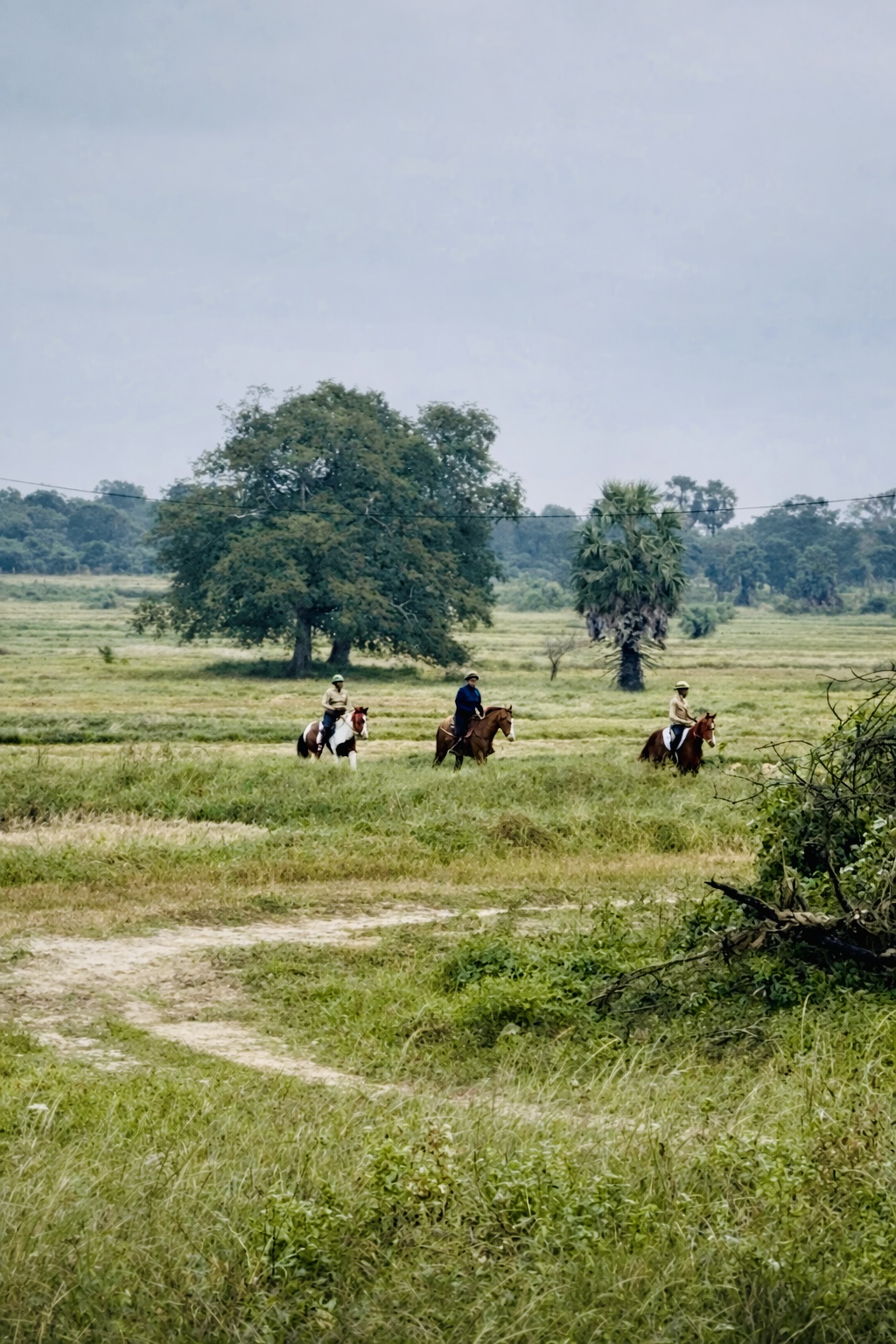
Long before a guest arrives, before a saddle is lifted or a boot finds a stirrup, the horses already know the country. They know where the river narrows. They recognize the firmness of certain crossings. They understand how wind moves across an exposed stretch in late afternoon. After rain, they adjust without instruction.
They travel with memory.
Riders, however capable, enter as students of that memory. This approach to observation before action is foundational to The Vonfidel Doctrine.
This order is important.
When horses understand the landscape more deeply than the people they carry, calm becomes the natural condition of the day. Guidance grows lighter. Corrections grow smaller. Confidence develops without announcement.
Nothing dramatic is required. This design principle — choosing restraint over intensity — is articulated in The Vonfidel Way, where practice meets purpose.
And that absence of drama is not luck. It is design.
Modern equestrian life is often tempted toward performance. Raised voices. Sudden movements. Moments that translate easily into images. They produce intensity. They read well online.
But intensity takes something from horses. It shortens judgment. It asks teams to compress decisions that should remain spacious.
We prefer durability.
Our wranglers, warrant leads, and support crews are not rewarded for spectacle. They are valued for steadiness, coordination, and outcomes that pass almost unnoticed. Radios are carried to prevent uncertainty, not advertise capability. GPS is present to maintain continuity, not theatre. Routes are revisited because memory is a discipline.
Guests rarely see the structure behind this. The rhythms that make this possible are central to our Horsemanship Training Holidays.
They experience the result.
They feel it in the way a horse settles into its work.
They feel it in how little needs to be said.
They feel it in the absence of urgency.
In time, something changes.
The same people who encouraged us to show more begin to understand why we choose to show less.
If everyone who watched decided to arrive at once, we would fail them. Not because we lack welcome, but because scale is part of welfare. Our horses require it. How we attend to perception and physical care is described on our About Our Horses page. Our standards depend on it. Our people deserve work that remains human.
We are not built for crowds.
We are built for continuity.
From that decision, other things follow naturally. Staff loyalty deepens when rhythm replaces noise. Alignment improves when roles are clear. Relationships with local authorities remain constructive because predictable operations create trust. Over years, trust becomes reputation. Reputation becomes access.
Respect grows without announcement.
It is rarely viral.
It lasts.
What emerges is a form of riding that can surprise those accustomed to louder places. There is capability without display. Communication without performance. Control without exhibition.
The horses know where they are.
By the end of the journey, the riders know it too.
And in that recognition, the work has done what it was meant to do.
At Vonfidel Ranch, people sometimes wonder why we do not try harder to be visible.
The advice comes often and usually with goodwill behind it.
Show more. Film more. Push the reach. If people could only see what happens here, everything would move faster.
Perhaps.
But speed has never been the measure of good work.
We operate in terrain that keeps a long memory. Horses remember. Communities remember. Authorities remember. The ground itself records the difference between care and haste.
So we build for the long account.
Long before a guest arrives, before a saddle is lifted or a boot finds a stirrup, the horses already know the country. They know where the river narrows. They recognize the firmness of certain crossings. They understand how wind moves across an exposed stretch in late afternoon. After rain, they adjust without instruction.
They travel with memory.
Riders, however capable, enter as students of that memory. This approach to observation before action is foundational to The Vonfidel Doctrine.
This order is important.
When horses understand the landscape more deeply than the people they carry, calm becomes the natural condition of the day. Guidance grows lighter. Corrections grow smaller. Confidence develops without announcement.
Nothing dramatic is required. This design principle — choosing restraint over intensity — is articulated in The Vonfidel Way, where practice meets purpose.
And that absence of drama is not luck. It is design.
Modern equestrian life is often tempted toward performance. Raised voices. Sudden movements. Moments that translate easily into images. They produce intensity. They read well online.
But intensity takes something from horses. It shortens judgment. It asks teams to compress decisions that should remain spacious.
We prefer durability.
Our wranglers, warrant leads, and support crews are not rewarded for spectacle. They are valued for steadiness, coordination, and outcomes that pass almost unnoticed. Radios are carried to prevent uncertainty, not advertise capability. GPS is present to maintain continuity, not theatre. Routes are revisited because memory is a discipline.
Guests rarely see the structure behind this. The rhythms that make this possible are central to our Horsemanship Training Holidays.
They experience the result.
They feel it in the way a horse settles into its work.
They feel it in how little needs to be said.
They feel it in the absence of urgency.
In time, something changes.
The same people who encouraged us to show more begin to understand why we choose to show less.
If everyone who watched decided to arrive at once, we would fail them. Not because we lack welcome, but because scale is part of welfare. Our horses require it. How we attend to perception and physical care is described on our About Our Horses page. Our standards depend on it. Our people deserve work that remains human.
We are not built for crowds.
We are built for continuity.
From that decision, other things follow naturally. Staff loyalty deepens when rhythm replaces noise. Alignment improves when roles are clear. Relationships with local authorities remain constructive because predictable operations create trust. Over years, trust becomes reputation. Reputation becomes access.
Respect grows without announcement.
It is rarely viral.
It lasts.
What emerges is a form of riding that can surprise those accustomed to louder places. There is capability without display. Communication without performance. Control without exhibition.
The horses know where they are.
By the end of the journey, the riders know it too.
And in that recognition, the work has done what it was meant to do.