
By Alfie Ameer, Vonfidel Ranch
Key Takeaway: Horse keeping is agriculture — not just stabling. By integrating forage production, composting (including compost capping), natural odor control, water harvesting, trees, and multi-species grazing, operations cut costs, improve welfare, regenerate land, and deliver better experiences — from horseback trail riding to immersive equestrian holidays in Sri Lanka.
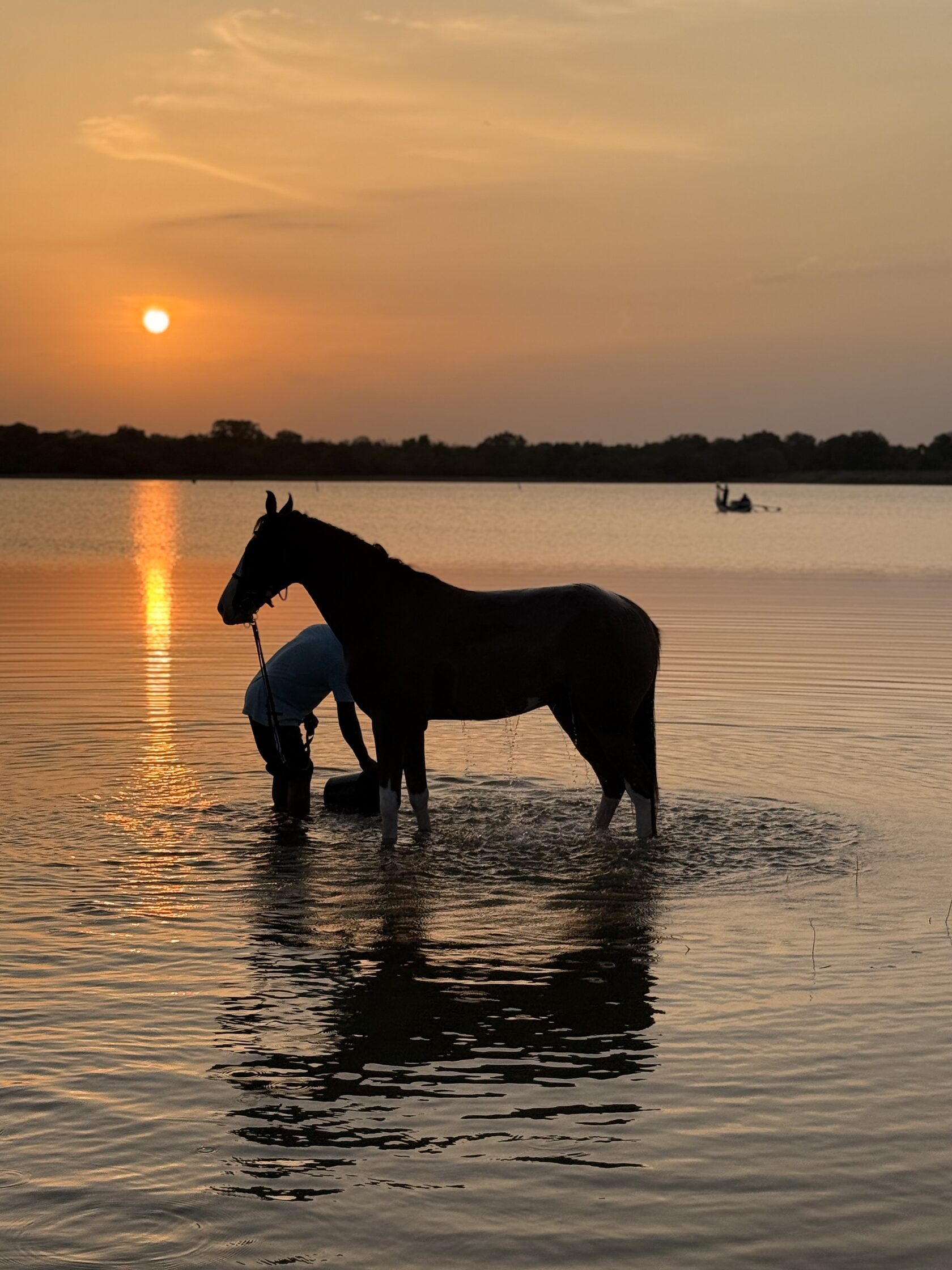
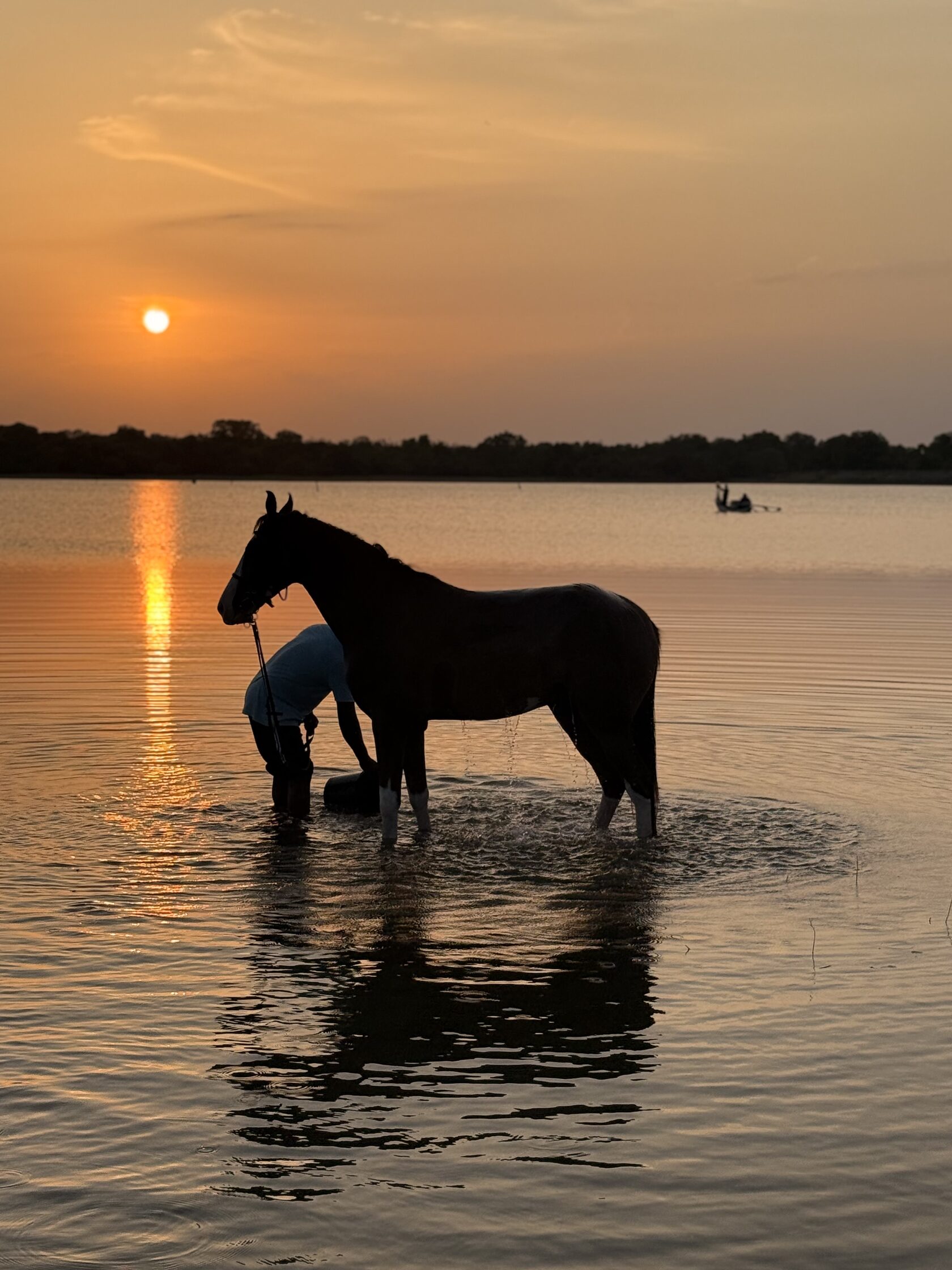
A horse enjoys a refreshing river bath after a nourishing feed, part of natural horse care that combines traditional rice polish and fermented rice water remedies with holistic equestrian well-being.
Why “Horses-Only” Doesn’t Add Up
A 450 kg horse produces roughly 23 — 25 kg of waste per day and drinks 27 — 41 L of water daily at rest. Run as a stand-alone stable, these needs become recurring expenses: manure hauling, purchased feed, water bills, and urine-ammonia odors.
Treat horse keeping as agriculture instead. In a whole-farm system, manure becomes compost, odors are neutralized with natural biology, rain harvesting buffers water demand, and on-farm forage reduces dependence on outside feed. The result: lower inputs, healthier horses, and more resilient land.
The Integrated Model (Simple, Proven, Scalable)
Forage First
Plan pasture and hay acreage to your soils and rainfall. Use rotational grazing to protect regrowth, lift soil organic matter, and improve drought resilience.
Multi-Species Grazing
Horses graze selectively. Adding cattle or small ruminants evens sward height, suppresses weeds, and often increases pasture use efficiency by ~5 — 20%.
Manure into Fertility
Compost stall waste and return it to pastures, hayfields, and tree rows. Aim for a ~30:1 C:N ratio, keep piles aerated and moist, and apply finished compost to build soil structure while reducing fertilizer purchases.
Natural Odor Control (Urine Included)
Urine ammonia is a welfare and neighbor-relations challenge. Vonfidel Ranch uses simple, natural methods:
• Deep carbon bedding (straw, wood shavings, or hemp) absorbs urine and limits ammonia volatilization.
• Beneficial microbe sprays (e.g., fermented rice water: 24 — 48 hours fermentation, then dilute 1:10 — 1:20) to competitively suppress odor-forming bacteria.
• Biochar addition mixed into bedding or compost to bind nitrogen and improve final compost quality.
• Lime or zeolite dusting (light applications) on stall floors/high-traffic areas to neutralize acidity and bind ammonia.
• Compost capping to bio-filter odors and retain nutrients (explained below).
What Is “Compost Capping”? (Definition, Benefits, and How-To)
Compost capping means covering fresh manure/compost piles with a carbon-rich “cap” so the pile decomposes cleaner and more efficiently, with less odor, fewer flies, and lower nitrogen loss.
How It Works
• Build your pile with fresh stall waste (manure + bedding).
• Cap the top with a 5 — 10 cm layer of carbon material:
• Straw, dry leaves, or wood shavings/sawdust, or
• Finished compost (excellent bio-filter and inoculant).
This cap acts like a biological filter: it absorbs moisture and intercepts gases (ammonia/odors) so microbes in the cap process them instead of letting them escape.
Benefits
1. Odor reduction (ammonia and “stable smell” drop noticeably).
2. Fly control (less attractive surface for egg laying).
3. Moisture & nutrient retention (less leaching, better pile heat).
4. Cleaner, more professional look around the stable.
Step-by-Step (Stable Routine)
1. Pile: Tip fresh manure + bedding to the compost area.
2. Cap: Add 5 — 10 cm of straw/leaves/shavings or finished compost over the exposed surface.
3. Repeat: Every time new waste is added, re-cap that fresh layer.
4. Moisture & air: Keep the pile as damp as a wrung-out sponge; turn/aerate periodically.
5. Cure & use: When dark, crumbly, and earthy-smelling, return compost to pastures, hayfields, and tree rows.
📌 5 Natural Odor-Control Practices Every Stable Should Adopt
1. Deep carbon bedding — absorb urine, cut ammonia, recycle as compost.
2. Beneficial microbes — fermented rice water (24 — 48 h), dilute 1:10 — 1:20 before spraying.
3. Compost capping — 5 — 10 cm of straw/leaves/shavings or finished compost on every fresh layer.
4. Biochar mix — bind nitrogen in bedding/compost and enhance soil fertility.
5. Lime/zeolite dusting — neutralize acidity and bind ammonia on floors.
Trees, Water, and Cooling
Silvopasture (trees integrated with pasture) reduces heat stress and provides secondary outputs (fodder, timber, fruit). Combine tree shade with rainwater harvesting and shaded troughs to stabilize supply in hot months.
From Agriculture to Experience
This integrated model reduces costs and elevates guest experience. Visitors to Sri Lanka see sustainable farming in action — horseback trail riding, horse safaris, and equestrian holidays that connect horsemanship with land stewardship. It’s memorable for the right reasons: welfare, safety, and authentic landscapes.
Learn More
🌐 Website: Vonfidel Ranch official site
📍 Google Business Profile: Vonfidel Ranch on Google Maps
📸 Instagram: Follow Vonfidel Ranch on Instagram
About the Author
Alfie Ameer writes on sustainable equestrianism and leads brand strategy at Vonfidel Ranch, advocating for integrated, farm-based horse operations where everything feeds everything.
Call to Action
Design a more sustainable stable — or plan your next equestrian holiday in Sri Lanka with us:
• Explore our programs at the Vonfidel Ranch website
• Visit us via Google Maps Business Profile
• Follow daily updates on Instagram @vonfidelranch