
Spend enough years around horses and certain patterns become difficult to ignore.
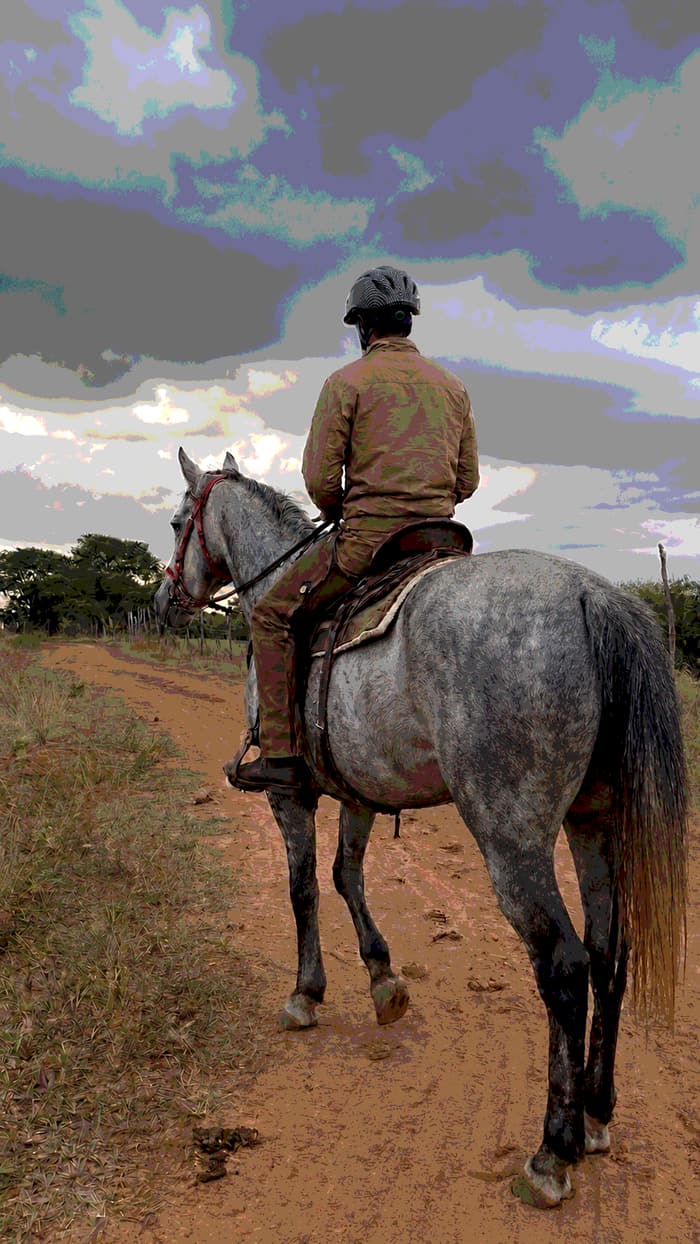
The riders most concerned with speed are rarely the horsemen you remember. The horsemen you remember are usually the quiet ones. Their horses stand calmly when asked, move willingly down the trail and rarely seem to be in conflict with their riders.
Nothing appears hurried, yet everything gets done.
Over the years, I have come to believe that many people measure the wrong things in horsemanship.
Speed is easy to measure. Distance is easy to measure. Competition results are easy to measure.
Trust is not.
Yet trust is the one thing upon which everything else depends.
A horse can be pushed to move faster. A horse can be pressured into compliance. A horse can even be made to perform impressively for a short period of time.
None of those things tell us much about the relationship itself.
The real test comes later. It comes when the horse encounters something unexpected. It comes when the horse is tired. It comes when conditions are less than perfect and the rider asks for one more effort.
That is when training reveals itself, not as a collection of techniques, but as a relationship.
At Vonfidel Ranch, our horses spend their lives crossing varied country. They travel through jungle corridors, open plains, water crossings and remote tracks beneath the tropical sun. The landscape changes constantly. The principles do not.
A horse that trusts its rider will often attempt things that force alone cannot achieve. A horse that understands what is being asked will almost always give more than a horse that is merely being controlled.
The longer I work with horses, the less interested I become in shortcuts.
Most problems become easier once you stop asking how to make a horse do something and start asking why the horse is reluctant in the first place.
Sometimes the answer is discomfort. Sometimes it is confusion. Sometimes it is simply a gap in education. More often than many riders care to admit, the answer lies with the rider.
Good horsemanship requires a degree of humility.
Horses are wonderfully indifferent to reputation. They respond only to what we do, not what we believe about ourselves.
That honesty is one of the reasons they remain such remarkable teachers.
They expose impatience, inconsistency and ego. But they also reward fairness, clarity and patience in a way few things can.
For that reason, ethical horsemanship is not separate from performance. It is the foundation of performance.
The horse that remains sound, confident and willing year after year is rarely the product of force. It is usually the product of thousands of small decisions made correctly over time.
Trail speed has its place. There are moments when the landscape opens, the footing is good and horse and rider move together with freedom and purpose. Those moments are part of the joy of riding.
But they are not the measure of horsemanship.
Long after the speed of a ride has been forgotten, a horse will remember whether the experience was fair.
Perhaps that is the measure that matters most.
The riders most concerned with speed are rarely the horsemen you remember. The horsemen you remember are usually the quiet ones. Their horses stand calmly when asked, move willingly down the trail and rarely seem to be in conflict with their riders.
Nothing appears hurried, yet everything gets done.
Over the years, I have come to believe that many people measure the wrong things in horsemanship.
Speed is easy to measure. Distance is easy to measure. Competition results are easy to measure.
Trust is not.
Yet trust is the one thing upon which everything else depends.
A horse can be pushed to move faster. A horse can be pressured into compliance. A horse can even be made to perform impressively for a short period of time.
None of those things tell us much about the relationship itself.
The real test comes later. It comes when the horse encounters something unexpected. It comes when the horse is tired. It comes when conditions are less than perfect and the rider asks for one more effort.
That is when training reveals itself, not as a collection of techniques, but as a relationship.
At Vonfidel Ranch, our horses spend their lives crossing varied country. They travel through jungle corridors, open plains, water crossings and remote tracks beneath the tropical sun. The landscape changes constantly. The principles do not.
A horse that trusts its rider will often attempt things that force alone cannot achieve. A horse that understands what is being asked will almost always give more than a horse that is merely being controlled.
The longer I work with horses, the less interested I become in shortcuts.
Most problems become easier once you stop asking how to make a horse do something and start asking why the horse is reluctant in the first place.
Sometimes the answer is discomfort. Sometimes it is confusion. Sometimes it is simply a gap in education. More often than many riders care to admit, the answer lies with the rider.
Good horsemanship requires a degree of humility.
Horses are wonderfully indifferent to reputation. They respond only to what we do, not what we believe about ourselves.
That honesty is one of the reasons they remain such remarkable teachers.
They expose impatience, inconsistency and ego. But they also reward fairness, clarity and patience in a way few things can.
For that reason, ethical horsemanship is not separate from performance. It is the foundation of performance.
The horse that remains sound, confident and willing year after year is rarely the product of force. It is usually the product of thousands of small decisions made correctly over time.
Trail speed has its place. There are moments when the landscape opens, the footing is good and horse and rider move together with freedom and purpose. Those moments are part of the joy of riding.
But they are not the measure of horsemanship.
Long after the speed of a ride has been forgotten, a horse will remember whether the experience was fair.
Perhaps that is the measure that matters most.
Further at the Ranch: The Vonfidel Doctrine and Trail Rides.