
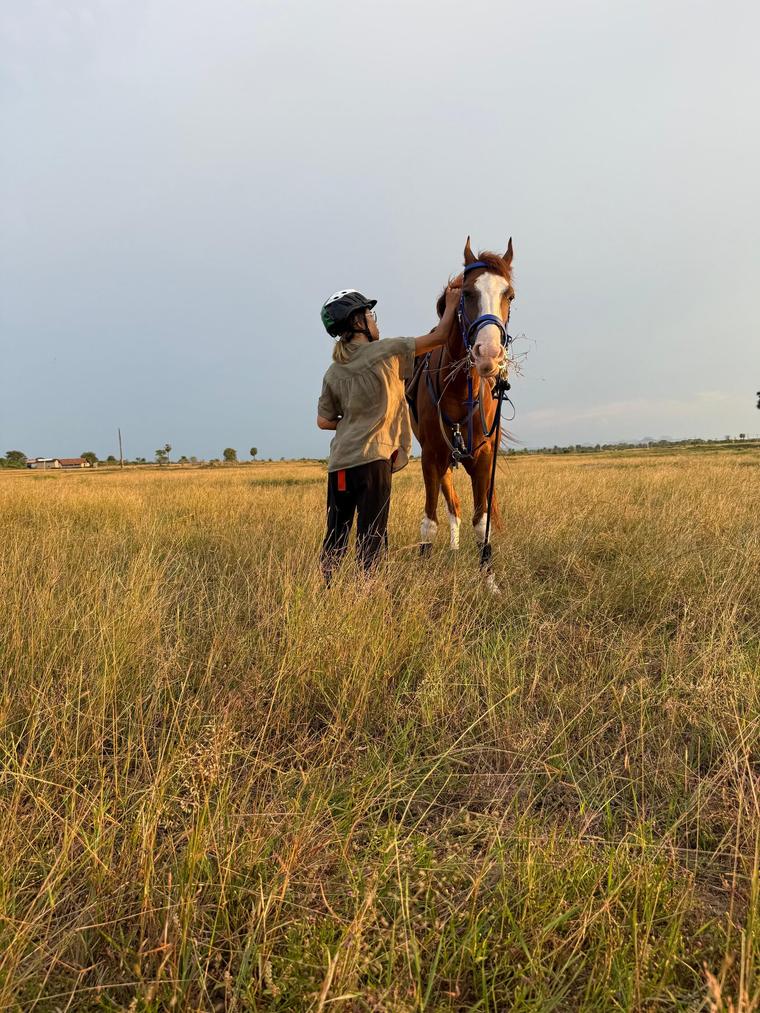
Guests often ask how long it takes to learn horses.
It is a difficult question to answer. Not because horses are complicated, but because most of us spend our lives learning to pay attention to the wrong things.
People notice what is obvious. A horse notices what has changed.
A gate that is usually open.
A vehicle parked where it was not yesterday.
A different sound on the wind.
A rider carrying tension in their shoulders.
A horse does not need a meeting to discuss these things. He notices them almost immediately.
Spend enough time around horses and you begin to realize how much information passes unnoticed by people.
A horse entering an unfamiliar area will often pause for a moment. Not because he is refusing. Not because he is being difficult. He is simply gathering information.
Looking.
Listening.
Assessing.
Most experienced horsemen have seen it hundreds of times. The horse notices something, and a few moments later the rider notices it too.
Out here, that happens more often than people think.
The landscape is always changing. Water levels rise and fall. Wildlife moves. The wind shifts. Rain arrives. Tracks appear where there were none before.
The horses often know it before we do.
This is one of the reasons we spend so much time simply watching them.
Not training.
Not riding.
Watching.
People sometimes assume horsemanship is about teaching horses. Part of it is.
Another part is learning when to stop talking and start observing.
A good horse will tell you a great deal if you pay attention.
How he feels.
What he trusts.
What concerns him.
What he is comfortable with.
What he is not.
The difficulty is rarely the horse.
The difficulty is whether we are paying enough attention to notice.
Some of the most useful things we learn at the ranch are not found in books, maps, forecasts, or schedules. They come from standing quietly beside a horse and observing the way he responds to the world around him.
The longer you do it, the more you realize something.
The horse was paying attention long before we were.
It is a difficult question to answer. Not because horses are complicated, but because most of us spend our lives learning to pay attention to the wrong things.
People notice what is obvious. A horse notices what has changed.
A gate that is usually open.
A vehicle parked where it was not yesterday.
A different sound on the wind.
A rider carrying tension in their shoulders.
A horse does not need a meeting to discuss these things. He notices them almost immediately.
Spend enough time around horses and you begin to realize how much information passes unnoticed by people.
A horse entering an unfamiliar area will often pause for a moment. Not because he is refusing. Not because he is being difficult. He is simply gathering information.
Looking.
Listening.
Assessing.
Most experienced horsemen have seen it hundreds of times. The horse notices something, and a few moments later the rider notices it too.
Out here, that happens more often than people think.
The landscape is always changing. Water levels rise and fall. Wildlife moves. The wind shifts. Rain arrives. Tracks appear where there were none before.
The horses often know it before we do.
This is one of the reasons we spend so much time simply watching them.
Not training.
Not riding.
Watching.
People sometimes assume horsemanship is about teaching horses. Part of it is.
Another part is learning when to stop talking and start observing.
A good horse will tell you a great deal if you pay attention.
How he feels.
What he trusts.
What concerns him.
What he is comfortable with.
What he is not.
The difficulty is rarely the horse.
The difficulty is whether we are paying enough attention to notice.
Some of the most useful things we learn at the ranch are not found in books, maps, forecasts, or schedules. They come from standing quietly beside a horse and observing the way he responds to the world around him.
The longer you do it, the more you realize something.
The horse was paying attention long before we were.
Further at the Ranch: About Our Horses and Standard of Access.